Chinese News: Reopening of Cross-Border Routes

Below is a summary of a few articles in Chinese media following the official reopening of DPRK borders. Jilin province clearly has a big stake in border conditions, reflected in these stories. The prizes referenced are, apparently, real. The optimism about reviving tourism seems to be, also. 

Yanbian has been the most important point of access to visit North Korea for people from China, or even the world. After years of development, the forms of tourism now include self-driving, cycling, walking and railway, etc. On March 16, 2015, the self-driving route ofChina-North Korea border was awarded as the Specially Recommended Cross-border Route by theChina Self-Driving Conference.

(from http://auto.gmw.cn/newspaper/2015-03/17/content_105192747.htm#commentAnchor)

Yanji, Jilin Province at night.

Yanji, Jilin Province at night.

Though in October 2014, North Korea announced that foreign tourists were banned from entering North Korea because of Ebola, recently staff from Bureau of Tourism in Jilin told a journalist from China News Service that Jilin will actively cooperate with related departments in North Korea and try to recover the tourism in full scale. Also according to the chief of the International Communication Section of the Bureau of Tourism, Tian Yunpeng, Jilin will enlarge the exploration of new projects of border trips, including more self-driving roads and sightseeing on waterways. Specifically, Jilin province will accelerate the opening up of the second China-North Korea self-driving road, from Changbai Port to Hyesan. The second cycling route, from Hunchun Shatuozi Port to North Korea will also be opened. Also the sightseeing on Tumen River will soon be under operation. Hopefully by the time the summer tourism high season comes, these new routes can be opened. (from http://www.hi.chinanews.com/hnnew/2015-03-03/4_45494.html)


Ebola Effect Lingers on Flight Availability to Pyongyang

Metrics. We get asked about metrics all the time. What metrics can you use when guessing about DPRK Econ stuff? Is traffic really down in Dandong? Have oil imports from China really decreased? How much has the mining sector grown?

Well here's two things we can see: the first Air China flights to Pyongyang in 2015 won't be until April 13th; also, Air Koryo is operating at basically 3/5ths of what they were in 2014.

This was one thing you could really point to in 2013/2014. In 2013, Air Koryo added two flights a week to Beijing, keeping them throughout 2014. This had been great for us, offering greater flexibility for our workshop leaders and letting us take full advantage of our volunteers' schedules. More importantly, it was a sign that more people were going in and out of China, mostly to do business.

Air Koryo expects to re-add the flights in April and we'll see if passenger numbers bounce back right away after the quiet winter. Meanwhile, return tickets this March are 12 RMB cheaper than last March.

It will be too late for Masikryong's to "bounce back" and show off its first full season as an international tourist resort, though we hear domestic business has been brisk.

No chance for the staff to practice their language skills this season.

No chance for the staff to practice their language skills this season.

#thedress tears DPRK study trip apart

look at this dress

look at this dress

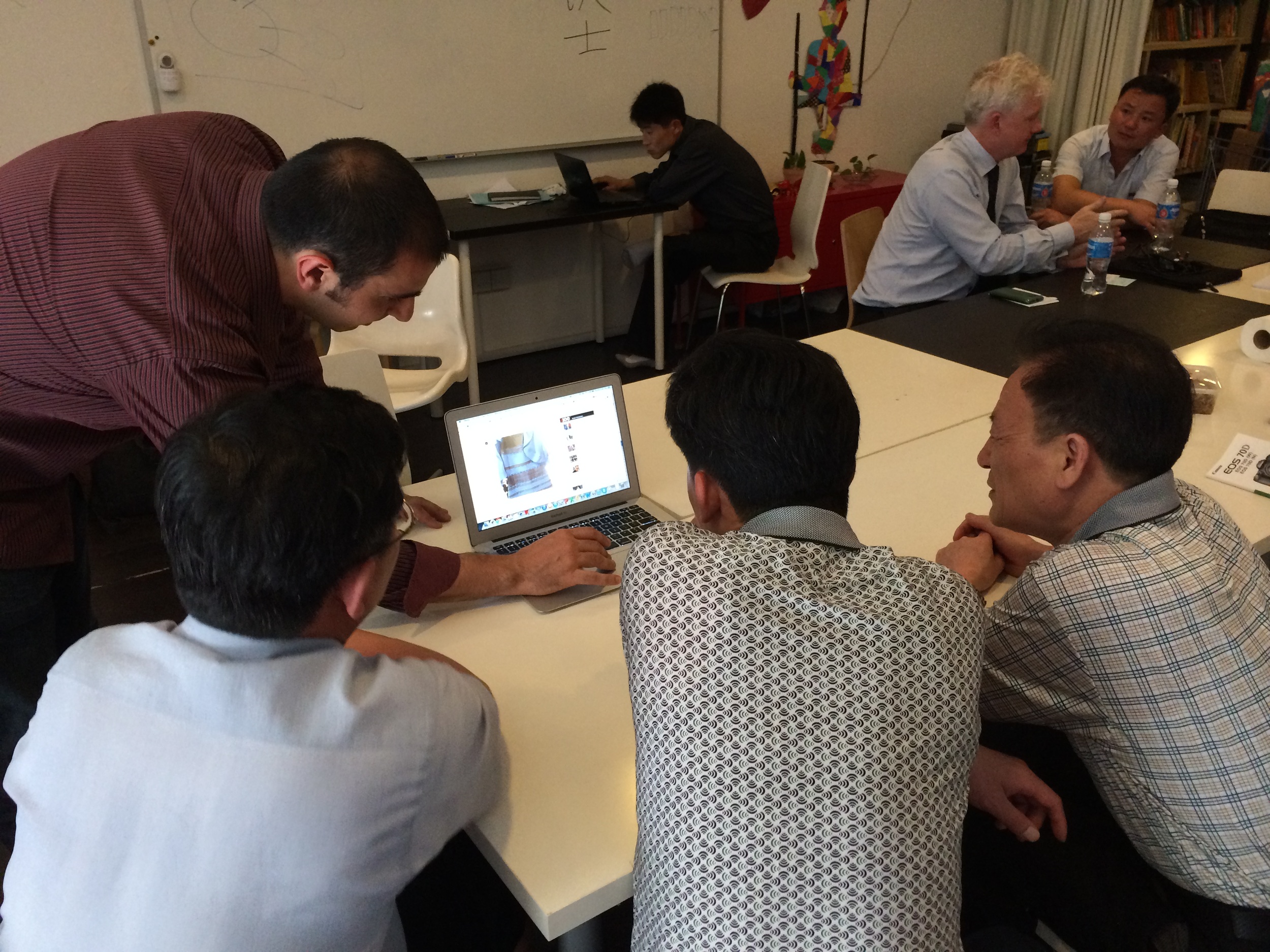
OK, maybe not quite, but like everywhere else the world, the dress sparked lively debate, with four of our North Korean students seeing blue and black. Eight saw white and gold. (Which is what it is, obviously.)

This started a spirited conversation that ranged across the nature of light, screen quality, objectivity and perspectivism and - inevitably - whether the humidity in Singapore was causing some people to lose their minds. (It was.) We offered to get group tattoos of it, but so far no takers. 

Still, it was a nice break from the rigours of learning about start-ups, growth models, funding cycles and government entrepreneurship policy, though there was plenty of energy left for intense discussions on the difference between a start-up and consulting model for business during the next workshop session. 

It also perhaps helped illustrate just how much of our (sad?) social lives now take place online. 

discussions continued all over the city

discussions continued all over the city

Ebola. We're still talking about this?

Indeed, we are, four months on.

The news on Monday that the Pyongyang Marathon was cancelled came as a shock to some of us. It is certainly terrible for the tourism industry: that event was to anchor their biggest week of the year, since there is no Arirang performance in 2015.

However, maybe its not as bad as it seems? As Koryo Tours put it: "It is still unclear when the borders will be reopened, but we were also advised not to cancel our March tours, and to expect an update on the border situation at the end of February. If you are booked on any of our tours in March or April then please do not hesitate to get in touch."

We've heard similar advice about our late March and April programmes. The Pyongyang rumour mill (and its extensions in Beijing, Dandong, Yanji and elsewhere) clearly thinks that quarantine will be lifted or adapted in the coming weeks. The questions are:

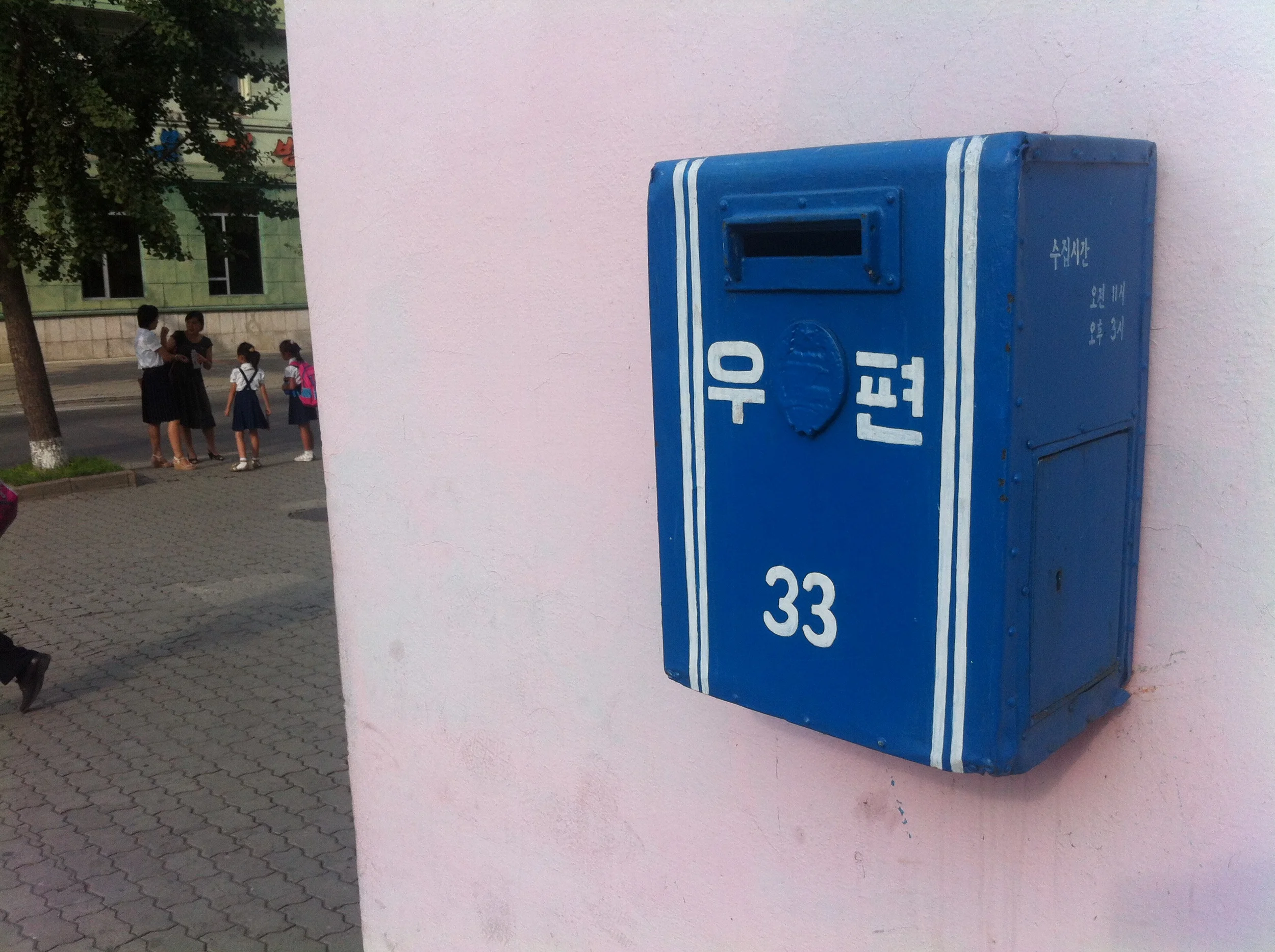
Send us news, Pyongyang! (but not by post)

Send us news, Pyongyang! (but not by post)

-Are the rumours true?

-If so, when exactly is the change coming?

The answers remain: "we don't know".

For CE this uncertainty has been damaging, though not on the scale it has been for the tour companies. We lost significant funding from a donor who needed to sponsor a project before the end of the fiscal year in March. Given that we have been unable to guarantee that March in-country programmes will go ahead, the funder had no choice by to reallocate the money.

We hope to execute the programme regardless and we are extremely grateful to have a team of workshop leaders who have a very flexible attitude towards this "stand-by for news" position we find ourselves in.

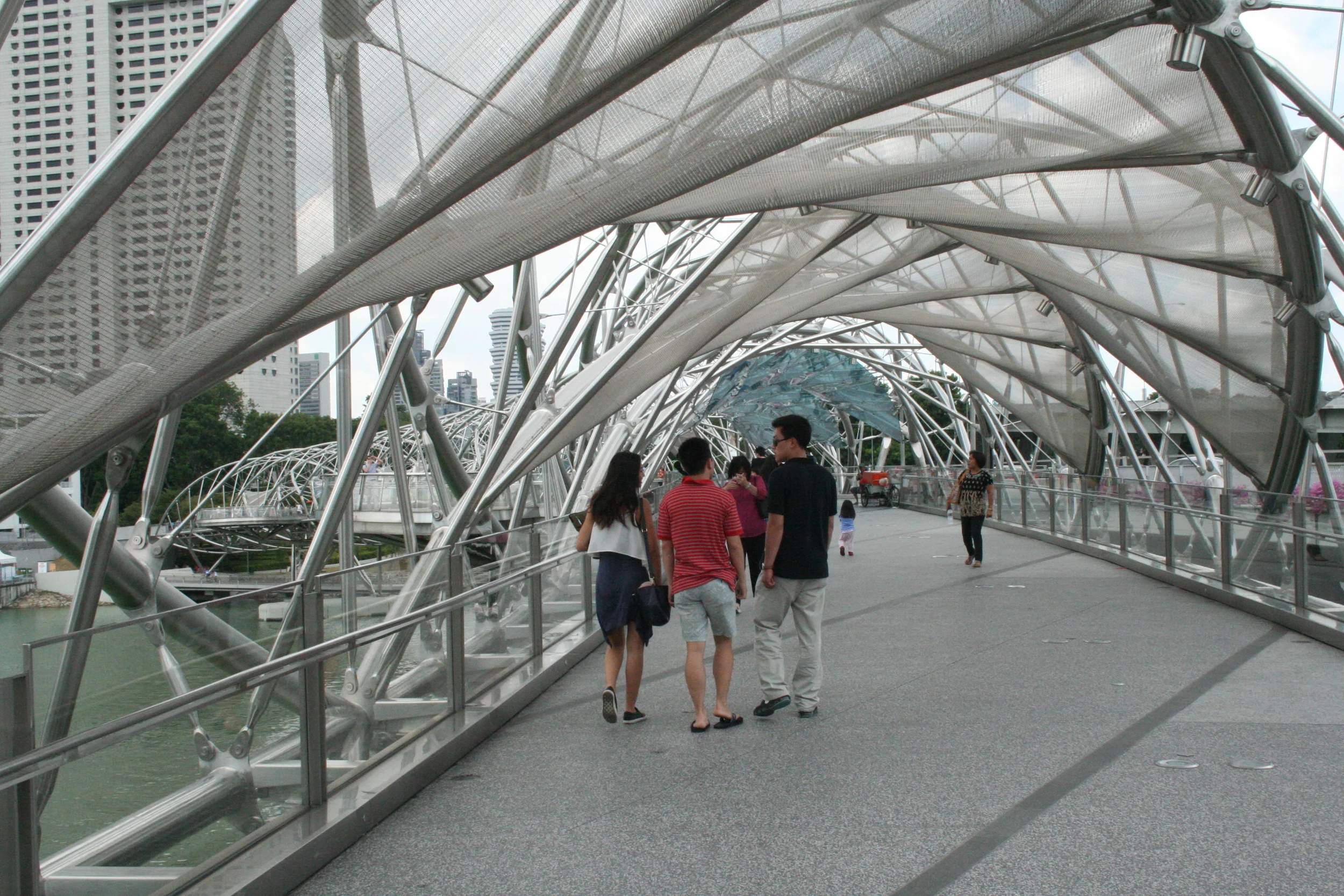
Fortunately, we have - despite the Ebola measures - been able to organise a study trip to Singapore. We'll see if participants in entrepreneurship training will also be participants in quarantine.

February Chinese Sources on Tourism and SEZs

One news story and one press release from China caught our attention this month. The first is a news story that reads very much like a press release and the second is essentially...a press release.

The first discusses Jilin province's plans to jointly develop more tourism across the border, in North Korea. This is exactly what Pyongyang wants and fits nicely with the tourism-focused SEZs along the border with China. Small investments in tourism infrastructure will allow for otherwise isolated regions to earn RMB and become more self-sufficient - or at least dependent on something new. Interestingly, discussions about self-drive tourism have continued between North Korea and the Northeast Provinces, with the experiments in Rason seemingly judged successful. Aquatic tourism presumably means cruises, fishing and rafting. Scuba seems unlikely. 

The second is a statement by China's Ministry of Commerce and reads as if its intended audience is in Pyongyang. It describes, essentially, how good things will be for North Korean workers in the Tumen Special Economic Zone. These are good sentiments and suggest Beijing's support for local plans to import labour from across the river. There will be remittances and some skills transfers, but it won't lead to the infrastructural and factory/mining refurbishment investments that Pyongyang is looking for. Ultimately, increasing numbers of workers sent across the border will have an inverse effect on the likelihood of a small or medium sized Chinese business setting up shop on the Korean side. Still, sending both laborers and businesspeople abroad in greater numbers (see the middle east, Mongolia and Russia for the former, mostly China for the latter) is something with which Pyongyang is increasingly comfortable - if their not getting the cross border investments they want, they may decide that this will do for now.

The articles are summarized below.

The view of Namyang, DPRK, from Tumen. Tumen got traffic lights just "6 or 7 years ago'. It will be linked to high-speed rail soon.

The view of Namyang, DPRK, from Tumen. Tumen got traffic lights just "6 or 7 years ago'. It will be linked to high-speed rail soon.


Jilin is accelerating development of border tourism by opening a new way to North Korea

Link: http://www.cet.com.cn/xwpd/shxw/1461423.shtml

From: China Economic News

Date: 02/03/2015

According to China News Service from Changchun, Jilin, which borders North Korea, the province is currently accelerating the development of cross-border tourism. According to information from the local tourism administration, Jilin is improving the diversity of tourism products, by emphasizing aquatic tourism on the Tumen River and a second self-driving route.

The aquatic tourism on the Tumen River will come out by the end of the year. From Fangchuan, the intersection of North Korea, Russia and China, to Yangguanping, the first stage will include sightseeing on the river. Tourism products related to ice for winter travellers will later be developed.

The second self-driving route will pass through Chanban port for departure, arrive in Samjiyeon in North Korea, and then to the eastern slope of Mount Changbai (also called Mount Baekdu).


 ________________________________________________________________________________


Tumen SEZ is actively perfecting its facilities and policies, in order to stimulate the fast growing of North Korean industrial zone. 

Link: http://www.mofcom.gov.cn/article/difang/jilin/201502/20150200892649.shtml

From: Ministry of Commerce of the Peoples Republic of China

Date: 02/09/2015

In recent years, Tumen SEZ insists on the principle of government-leading, and promotes the healthy and fast development of China-North Korea Tumen Industrial Zone through four initiatives.  

First is strengthening the construction of supporting facilities. A 21,000 m² comprehensive building that provides living place for 3,000 people has been built. A 9,000 m² dorm building is going to be built to satisfy the needs of North Korean workers.

Second is perfecting the management system. A management system that includes 15 points on North Korean workers lives, such as management, employment, health and security, will be regulated through rules and policies like Proposals of Managing North Korean Workers

Third is highlighting humanistic management. The habits, festivals and customs of workers will be fully respected by adding holidays for both traditional and local North Korean festivals.

Fourth is strictly examining enterprises. The SEZ will insist that corporations with harsh environment, unprofessional skills of management and unfamiliarity with Korean culture will not be provided with opportunities to invest. Up to now, corporations have provided North Korean technicians and workers daily necessities, food and clothes for changing seasons. 


Translations and Summary by Wang Xingyu

Beijing's Terminal 2 and Inter-Korean Relations

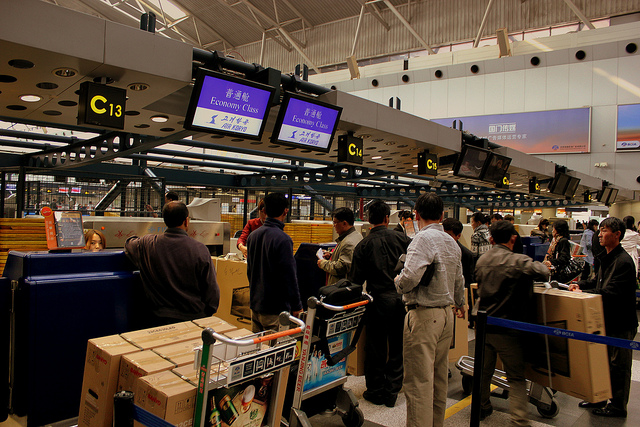
Ajummas. If you’ve been to famous tourist spots around the world you’ve seen them. Packs of middle-aged to older South Korean women, usually donning oversize visors, some form of bright hiking gear and some, inexplicably, with purple hair. And most mornings, some will touch down in Beijing on flights from Seoul and Busan at around 10 a.m., about the same time as the Air Koryo flight from Pyongyang arrives. 

One morning, a groups of Ajummas (who can be fairly oblivious travellers much of the time) trundled up to our Air Koryo baggage claim carousel and stood there for a second. Like the self-satisfied twerp I am, I joked, “Oh, are you from Pyongyang?” They blinked for a second and then erupted in laughter as they realised their mistake and went off unfazed and uncurious to find their bags.

Photo by Kenneth Tan

Photo by Kenneth Tan

Beijing Capital Airport is a study in North and South Koreans not noticing or pretending not to notice each other. Sometimes, as with those older ladies, that disinterest is genuine. Often, though, while in the queue at immigration or that last desperate Starbucks in Terminal 2, I’ve noticed younger South Korean travellers realise they are in line with a group of their northern kin. They’ll usually do a minor double take, steal a glance at the Kim badge, then return to their phones, probably to look at pictures of food. It’s hard to know exactly what is at work here, indifference or awkwardness or some combination of the two. Certainly, its easy to project what the polls tell us about attitudes towards unification onto the ambivalent traveller’s posture.

North Koreans, for their part, seem to take better note of their surroundings and can be seen eavesdropping a bit when near their Southern family. They tend to get a bit stoic and certainly don’t initiate any interaction. We'll see if change is in the air on this: a recent rumour is that Northerners stationed abroad have been told to "demonstrate flexibility" when meeting Southerners. Still, its just a rumour.

For now, to an outsider, it remains a sad, awkward thing to observe: these Beijing Airport interactions are one of the many minor melancholies that make up the larger tragic story of modern Korea. 

After all, how long can a family not talk to one another? How many generations can a family feud persist before they aren’t really a family any more?

It's hard to imagine there won't be a unified Korea someday because the idea still carries potency even if it has become diluted by other ideas in the south. But someday, an important marker in inter-Korean relations will be when Koreans from both countries feel comfortable enough – probably before they are allowed to visit one another’s countries – to have a normal chat in an airport in another county. Probably in a crappy Starbucks.

The North Korean Economy – is the timing off again?

Below is a slightly longer version of an article that first appeared in WSJ Korea Real Time on February 5th, 2015.

The ongoing division of modern Korea is one blighted by unfortunate timing. See, for example, Stalin declaring war on Japan in early August 1945, not knowing that in a week the war would be over. Take Kim Il Sung’s death in 1994, which came just after a breakthrough with the Americans. Or the first attempt to try to approach North Korea differently: Kim Dae Jung’s sunshine policy, which was misaligned with an incoming US administration that was anti-engagement. 

Will we have to add 2015 to the list of bad timing on the Korean peninsula?

Right now, it is clear that the DPRK is entering a phase of economic experimentation. The so-called May 30th measures of 2014, expanding on the June 28th measures of 2012, are the biggest steps away from state planning that the country has ever taken.

The details have never been publically announced, but enough information has surfaced to know that under the May 30th measures farmers are to keep 60% of their produce and work teams are to drop to family size. This goes beyond the respective 30% and “teams of ten or less” that the June 28th measures implemented.  

Less clear are how factories are to be run – though we hear that state-owned companies are being given more autonomy. Under the new measures, they are supposed to decide their own inputs and outputs while paying workers wages. This would take a whole slew of enterprises off the state planning system, so that while they remain state-owned, their decisions would be driven by localized assessments of market needs. 

North Korea tried something like this before in 2002. (Observers dubbed those changes in equally memorable terms: the July 1st measures.) To risk oversimplification – the planned-for incentives and autonomy didn’t stick and were largely rolled back in the mid-2000s.

Will it work this time? Will there be enough successes that the experiments become irreversible? There are both conservative and liberal voices in Pyongyang policymaking circles and there is a danger that without enough wins for farms and especially for companies under the new system, the experiment will be rolled back under a tide of opposition.

It is here that we come to potentially the next episode in modern Korea’s saga of bad timing. For these experiments to succeed, there are three things that North Korea needs but lacks.

The first is capital or seed money to get the ball rolling in the right direction. Some companies have their own reserves to play with but many don’t, and we already hear rumors of companies unable to pay their workers and having to be returned to the state plan. 

The second thing they need is training: managers of these companies have gotten used to being given raw materials and told what to make and in what quantity. Many of them are ill prepared to successfully judge and respond to markets and suppliers.

The third thing is fertilizer and other farming inputs to kick start production in agriculture.

The country that is the most obvious choice to assist with these inputs is, of course, South Korea. Broadly speaking, the stability that comes with a North Korean economy run along more “Chinese” lines is good for Seoul. But the ROK is in a political bind: sanctions introduced in 2010 after the sinking of the naval ship Choenan restrict new business as well as non-profit work with the North. Seoul demands an apology before these sanctions can be lifted, but Pyongyang denies involvement.

Yet interest in re-engaging the North is clearly growing among South Korean companies and non-profits. This is evidenced by the turnout at a conference in Seoul last week titled “Doing Business in North Korea”. The organizers expected 150 people. Four hundred came. 

More concretely, a South Korean consortium led by POSCO, Hyundai Merchant Marine, and KORAIL is considering buying half of Russia's 70-percent stake in a joint venture company that runs a 54 kilometer railway linking Khasan to Rason, a Special Economic Zone in the DPRK’s far northeast. A delegation went to explore options in December 2014, the same month that a pilot project sent 40,500 tons of Russian coal through Rason to Pohang, the home of the steel giant POSCO. It seems this is all happening with the blessing of the Seoul government.

If Seoul wants to see a North Korean economy run more effectively, with increased stakeholders in a non-state planned system, these kinds of workarounds and exemptions need to continue. Then a bit of creative thinking on both sides of the DMZ needs to take place to come to an agreement that lets Seoul find a way out of its own sanctions regime. 

Otherwise, a few years from now we may see a little-changed DPRK and look back on this period as one more case of Korea’s unfortunate timing.

"Doing Business in North Korea"

Choson Exchange’s Andray recently presented a paper at a conference titled “Doing Business in North Korea. Other presenters covered some subjects that grew out of specific experiences in tourism, textiles and other business ventures over the last couple decades. Andray’s paper focused on issues of perception that North Koreans will need to tackle if they are to turn themselves into the investment destination that they wish to be. Broadly, he highlighted two positive steps taken last year and one negative policy, indicative of some of the economic thinking that currently takes place in the DPRK.

1.     The May 30th Measures

In 2014, the Central Committee of the Korean Worker’s Party promulgated the so-called and not-yet-fully-clear “May 30th Measures”. At, as you might suppose, the end of May. This policy remains not fully articulated to outside observers - information has come out in dribs and drabs. Recent snapshots suggest it could be significant, though, with a change in farming work unit size (down to a 'family size' of 4 to 6 people) and a shift to the work unit being able to keep the majority of its production: 60%. This is up from a 30% farmer-allotted experiment that began in 2012/2013 – the so-called “June 28th Measures.  

It is clearly part of a trend taking place during the Kim Jong Un era that sees the authorities looking towards greater autonomy for companies and farmers, a move away from state planning, even while ownership resides officially with the state. This should create productive capacity, though getting the ball rolling is difficult for companies and farms that don’t have the initial inputs needed. 

2.     The SEZs

Thirteen SEZs were unveiled in October 2013, dotted around the country and fitting into five categories: Export Processing/Trade Zones; Industrial Development Zones; Agricultural Development Zones; Tourism Development Zones; and Economic Development Zones.

In June 2014, Wonsan was designated a Special Tourism Zone and then in July, the Presidium of the Supreme People’s Assembly announced six new SEZs were to be created. Sinuiju was also rebranded as the Sinuiju International Economic Zone at that time. Most of these SEZs will not develop quickly, though there are four with decent prospects.

 These zones can potentially create several platforms for other experiments in governance and policy. The four pre-existing major SEZs – Kaesong, Kumgangsan, Hwangumpyong/Wiwado and Rason have created important precedents, Rason in particular.

3.     Ebola

The DPRK’s procedures related to Ebola are not an ‘economic policy’, per se, but have had as significant an economic impact as any other policy initiative in the last year, if not moreso. The October 2014 decision to require any visitor or returning Korean to undergo a 21-day quarantine has had businesspeople, diplomats, tourist agencies and non-profits struggling to operate normally. 21 days essentially means a travel ban, though in November exemptions to the restrictions were being found, both officially and unofficially. Then followed a period of tightening up, it appears, leaving interested parties simply waiting for news into February.

 As 2014 gives way to 2015, some positive takeaways from both the SEZ policy and the bits of information that have emerged on the May 30th measures have been damaged by Pyongyang’s response to Ebola. It will be difficult for the North Koreans tasked with selling their country as “open for business” to counter the negative PR that this Ebola policy has generated. 

Retail in Pyongyang changing

Choson Sinbo reports that Hwanggumbol, a company that we've trained in CE workshops, is setting up 'big box' style shops or department stores in several neighborhoods across Pyongyang. This is new: a large chain store with several departments, from food, to clothing to daily use items, with several locations around the capital. Two are already open.

A chain store is a new idea, but perhaps the main innovation is the opening hours: 6 a.m. to midnight, far longer than any of its competitors.

Hwanggumbol managers have taken part in multiple CE workshops and have taken part in mind-mapping and team-building exercises, as well as lean startup methodology and customer needs strategies. It is fitting that the article speaks of "responding to people's demands", though it is then said that "the idea of loving people", rather than "responding to their demands" is the concept they use. Its gratifying to see that some of the concepts we've covered in workshops are packed up in PR-conscious statements like these.

On a Women in Business workshop in Singapore last year, the businesswomen were obsessed with how retail worked elsewhere - Geoffrey recounts here how it took ages to drag them through a mall, not because they were shopping, but because they were taking notes on everything. They were extremely curious about how customers could be attracted, engaged and kept.

"Open 18 hours a day?! That's pretty damn good!" 

"Open 18 hours a day?! That's pretty damn good!" 

Back in Pyongyang, the manager of Hwanggumbol, Mr. Ryang Sung Jin, mentions that they are "prioritizing benefits for the people and their business' goal is people's convenience". Clearly, these guys have found their angle, differentiating themselves quite dramatically from the competition.

Rather practically, the article also notes that while other countries have 24-hour shopping, they judged that that wouldn't work in Korea.

But who knows? It may someday. We know other start-up companies exploring a convenience store concept, dry cleaning and delivery services. A convenience store will now have to compete on either opening hours or location, because these big, fairly cheap stores are going to start popping up around Pyongyang: three more are opening next month. We're not sure Pyongyang will be on an "top ten for expats"  list for expats any time soon, but it seems as if retail is looking up!


Two media firsts for Choson Exchange

Last week, Andray did a live Q&A for The Guardian and just a few hours later Geoffrey appeared on Channel News Asia's "First Look Asia" for a live TV interview. With Geoffrey was our volunteer workshop leader, bon vivant and chief of the Shanghaiist, Kenneth Tan. On CNA, they spoke mostly about THE Choson Exchange and the workshops that THE Choson Exchange Organises*.

Kenneth calls his fascination with North Korea "inexplicable", noting that he wanted to go but not with a tour. Geoffrey expounds by stating that while some workshop leaders we take are interested in business opportunities, the vast majority are just curious about seeing the DPRK, but off the "beaten tourist trail". And that if you happen to be in the coffee business, you can even become something of a minor celebrity in Pyongyang. Much of the interview focused on what it is like to be a foreign visitor to Pyongyang.

in the Guardian Q&A, Andray ranged over a variety of topics posed by readers, including more questions focused on what CE audiences are like. One question on conformity and control was, "how do you couch personal ambitions in the context of submission to the state and dear general?" It elicited this response:

Koreans exist in a social and economic system that demands a lot and emphasises unity and loyalty to an incredible degree. That said, they’re individuals with the same aspirations as people anywhere: they want to have a good career, they want their kids to have opportunities, they want to get into the best university they can, they want - increasingly - to run their own business and succeed. Pretty normal, human stuff, really.

Perhaps most crucially he advocated for Jose Mourinho to leave the Premier League and coach in North Korea for a year. (Or forever). 

As for Mourinho, North Koreans love football and would recognise his genius and welcome him as a coach. For my part, I would love to see him leave England. (Arsenal fan)


*If this sentence looks weird, forgive us - we prefer CE to go without an article. Just "Choson Exchange" is fine. And since we're here, no 'u'. Two 'o's, if possible.