Summary of Team Discussions for April

There are a lot of interesting discussions within our group on how we can and should increase our impact - most of the ideas never see daylight, but it is these discussions that make working with the rest of my teammates an amazing experience. A brief round up of some discussions: How do we measure impact of our work rigorously: Pinquan and Me How do we leverage the expertise of others in delivering OpenCourseWare: Luke and Me How do we reach out in South Korea: Soojin How do we brand our work in North Korea: Peter and Luke How do we develop sustainable financing models: James and Will What are the funding needs we have in order to scale up our programs: Peter and Me

Apologies if I missed anyone. I have been traveling extensively and I know that my mailbox is flooded.

Summer Begins

Posts will be intermittent as everyone heads into the summer. It is a period of transition for everyone but now that we have finally put together everything (something we should have done two years ago when this effort really started in earnest), things are looking good. This summer will be a busy month for me as there will be a series of really interesting and important meetings: 1. Early May - St Gallen Symposium in Switzerland (Trying to meet Egyptian investors in North Korea to pitch for their support on our education project)

2. Mid-May - Travel in Turkey and Syria (A major to-do item after reading books on Syria’s political organization)

3. Late May - Receive award at World Bank Annual Bank Conference on Development Economics in Sweden for work on legal structures for youth entrepreneurship (Chance to tap Bank’s expertise to provide content to North Korea and meet the Swedes working on technical assistance to North Korea)

4. Mid July - Receive award at Australia National University’s East Asia Forum for political analysis in an article (Chance to meet Australians working on technical assistance to North Korea)

One of the ideas I am thinking of exploring is for all the groups offering technical assistance to North Korea in certain fields should have some knowledge sharing or coordinator. A rudimentary database with dates of events, participant groups, content and feedback would be helpful for everyone to improve their work.

NK Fun Fact: Communicating with North Koreans

Outside of North Korea, I stay in touch with my counterparts in Pyongyang through email. They use one email address for the entire organization, which somehow miraculously routes incoming emails to the right person. I never know if something gets lost along the way, but I am keeping that question on my agenda for my next visit. Perhaps one way they keep track of whom the email is meant for is not just content or who it is addressed to, but by the email of the sender. A North Korean might be assigned to receive registered email addresses only. This could explain the following facts:

1. Unsolicited emails normally never get a response 2. It took a long time to persuade my counterparts to switch the email they were sending replies to. Even if I sent an email by my Gmail account, they would reply to my school email.

All these are conjectures from a small sample size.

Also, the language they use occasionally remind me that the culture gap exists, and that it is important to close it. A counterpart used to sign off his email by wishing me "world frightening success" in my research. I would just settle for someone reading it.

Relevance of the OCW Model

We have been discussing on ways of incorporating the OCW model to deliver educational materials to the North Koreans. Increasingly, universities are using various forms of OCW to share information with the public, where lectures are posted as webcasts and Columbia University even has clips on iTune U for download. While the model provides cost savings through distance learning, there are certain issues, which include the learning culture in DPRK and the specificity of the taught subject that needs to be address in order for it to be relevant to the North Koreans. These various concerns will be addressed using the architectural discipline as an example. Learning Culture

The architectural discipline is largely dependent on the learning culture rather than pure knowledge, which means that even if we have all the information made readily available for the North Koreans, students may find it hard to apply to their context. For example, lectures on digital fabrication in architecture would not be relevant if there are no equipments available to produce these prototypes. Furthermore, even if equipments are available, students may not use it if the university’s learning culture is not in digital fabrication design. This is the case for many Asian universities where advanced fabrication equipments are underutilized because it is not part of the university’s culture to pursue such research.

Specificity of Subject

Furthermore, the architectural discipline is extremely vast and loosely defined, for example, a person's interest can range from the philosophical and political nature of architecture to the cutting edge construction techniques. The various DPRK universities together with the Paektusan Academy of Architecture are already producing architects who can perform the basic tasks of an architect. Therefore, we are hoping to value add to their education through introducing a wide range of subjects while tailoring to suit DPRK’s context.

Joint Research Studio

To ensure the relevancy of the OCW model, perhaps it would be most effective to establish a joint research studio between North Korean architecture students and a partnering university researching on a specific aspect of DPRK architecture. Through this common research topic, theoretical knowledge and technical skills can be transferred in the most relevant way. Examples of such twinning architectural research programs include collaboration between Tsinghua and Penn, or Tongji and Yale, where students spend a couple of weeks at each university to share their research.

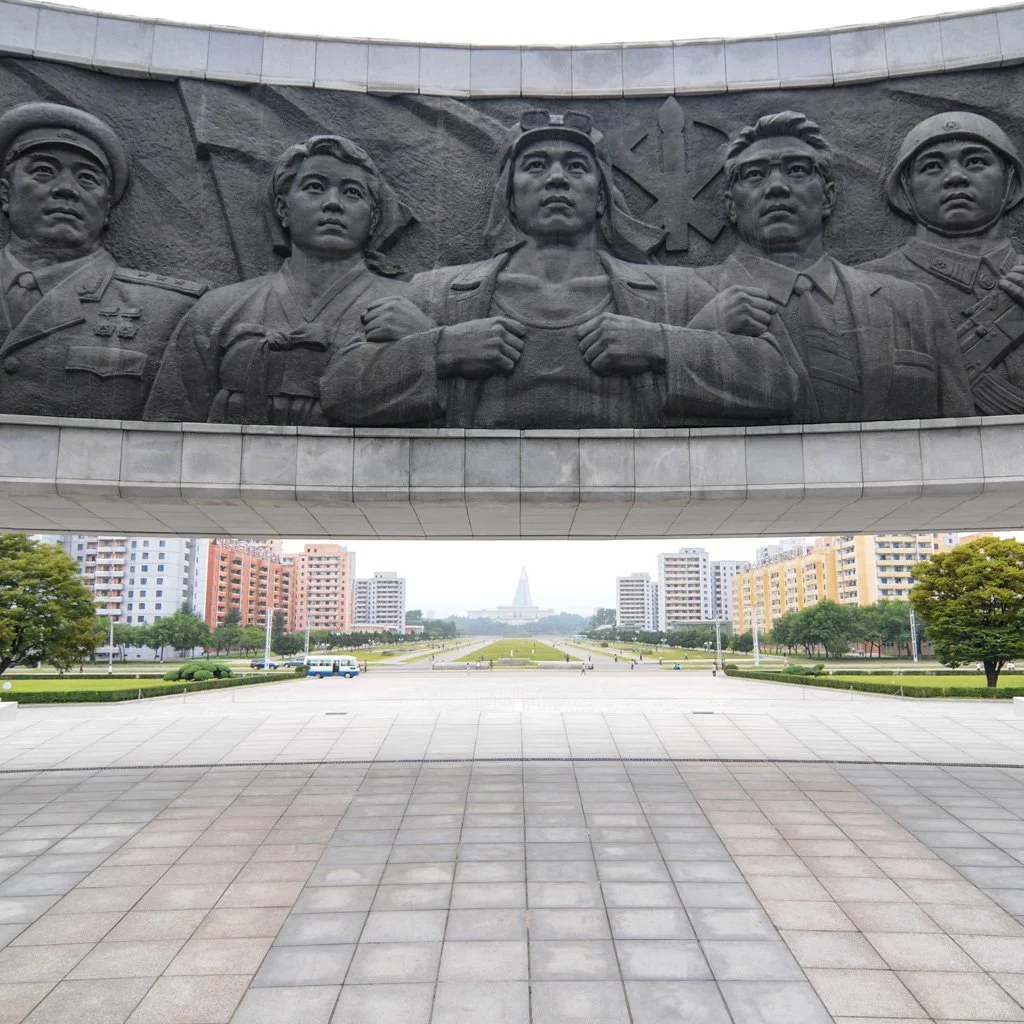
Studying the Symbolism and Purpose of the Mass Games

The Mass Games is a propaganda spectacle in North Korea involving 100,000 performers in synchronized performance. Recently, a researcher approached me suggesting an interesting project bringing drama students and religious studies students over to study this phenomenon and its symbolism. He is interested in understanding what the activity means to North Koreans using interpretative methods. This looks like an interesting opportunity which we hope to explore next year.

New Team Member - Luke Hutchison

I am glad to have the opportunity to present the latest addition to our team. As mentioned, we hope to deliver our programs by centering it on OCW materials. Luke Hutchison is a great addition to our team and will help lead our efforts in this area. A very talented person, Luke hails from New Zealand, speaks Korean fluently and studies Computer Science and Computational Biology as a doctoral student at the Massachusetts Institute of Technology (MIT). Its only fitting that we have someone from the source of OCW to lead our work in this area!

Luke Hutchison grew up in New Zealand and is currently completing a PhD in computer science and computational biology at MIT in collaboration with Harvard Medical School. He is conducting research into cell division and tissue differentiation in C. elegans. He speaks both Korean and Chinese and has traveled within both North Korea and China to better understand the North Korean way of thinking and to gain insights into North Korea's relationship with China. He has been interested in helping improve the lives of North Korean citizens for over a decade, and is excited at the possibilities that Choson Exchange presents for improving the quality of education in NK and for promoting international goodwill.

Delivering Low-Cost Education Through OpenCourseWare

CE-Model-online.jpg

Our strategy is to incorporate a higher level of technology into our training model. A big development in higher education is a move towards OpenCourseWare - lecturers put videos, syllabus and notes online for anyone else to peruse. Yale and MIT have been big proponents of this.

Most of our costs come from flying in suitable lecturers from their home countries to Beijing. It would save us a lot of costs if we can pipe in lectures on certain topics, chosen by our lecturers, and have the lecturers come in at various points to discuss the materials, answer questions and interact with students. Since language will be an issue, we can also provide language assistance on-site for students trying to understand OCW materials. At the end of the course, we can use exams to screen students for future support.

This is something which we can design our current programs around. Kim Il Sung University has a new computer center and this could be a possible home to such an idea.

New Additions to Training Team and Our HR Manager

When Choson Exchange first began, it was small enough that I had the luxury to interview everyone who wanted to be involved and get to know them at a personal level: their aspirations, motivations and personality. However, as interest have grown, I find it harder to keep track of everyone's needs and whether we are helping them meet their goals just as they are helping Choson Exchange meet its mission. Hence, we brought on Soojin, who will be our Human Resource manager. She will be in charge of recruiting, tracking everyone's efforts and seeing how we can help them develop. Soojin will graduate from the University of Pennsylvania's Wharton School with a dual degree in International Studies and Economics this summer. She is a great addition not just because of her deep interest in North Korean issues, but also because she speaks Korean and Chinese and lived in China. This will allow her to coordinate our efforts to involve more trainers from the US and China.

I still try to take time to interview everyone interested in joining our team. The requests have been piling up and last week, I interviewed four more potential lecturers. We would like to welcome A.E. and Dominic Soon who will contribute their valuable experiences in our upcoming training session in Pyongyang this September. They bring exciting experiences to our team. A.E. has close to a decade of experience in the private sector as a commercial banker. A.E. also brings with him a wealth of experience from working in Latin American, Southern China, Taiwan and the USA. A graduate of Oxford's Politics, Philosophy and Economics program, A.E. was highly involved in his university's Asian Societies. Several years ago, A.E. visited Pyongyang and a highlight of his time there was the opportunity to join a picnic with Kim Il Sung University students to talk about their aspirations and interests.

Dominic is an economist in Singapore's Ministry of Trade and Industry and a recipient of the Singaporean public service scholarship. As part of a team that recently studied how Singapore's economic strategy should change, he can contribute valuable experience on designing an economic restructuring process as a means of attracting foreign investment. Dominic graduated from Cambridge University and received his Masters at Yale University.

I hope that their valuable time and experiences will leave an impression among the North Korean professors and executives we will train this September. Through expanding our training team, we hope to introduce more dialogue-driven sessions that will enable us to have a more dynamic discussion with participants.

Sponsoring Our Work

In order to ensure that our programs have an impact, we wish to ensure that lecturers receive some funding in the future. If we lose lecturers year after year because of the expense of flying to Beijing and then into Pyongyang, we lose a lot of experience built up from interacting with the North Koreans. Without this experience, we cannot deliver training materials in a relevant and effective manner. If you know people who would be interested in sponsoring our work whether in providing financial contributions or in providing overseas training programs, academic programs or internships to North Koreans, do send them this guide.