Patronage Post-Jang

Author/poet Jang Jin-Sung has been splashed across the media this past week as his new book, "Dear Leader", has just come out in English. Meanwhile, over at New Focus International, he has a post from a couple weeks ago about government appropriation, distribution and...well, a whole bunch of things - it kind of meanders around like an off-the-cuff lecture from an aging professor. But near the bottom of the ironically unfocused post is an interesting nugget:

"But above all, in the wake of Jang Song-thaek’s execution, the mood has remained savage; and cadres consequently have not had the stability and confidence to extort bribes the way they have done before."

This at first seems like a good thing. Less corruption is good, right? Well, not necessarily. You will have heard this case made already if you're a fan of Ha Joon Chang, an overseas compatriot (to use a very North Korean phrase) and Cambridge reader in Economics (to use a very British phrase). In his 2007 book, Bad Samaritans, he argues that corruption is not inherently bad for economic growth, unless the money taken in bribes is not invested productively in the economy. Bribery can also sometimes "enhance the efficiency of an over-regulated economy by reintroducing market forces" (p.150), allowing productive businesses to get moving when otherwise they would bog down in red tape. The related question Chang brings up is, "what would have been done with the money had there been no corruption"?

The DPRK has, officially, no private sector at all and is perhaps the definitive over-regulated economy. In reality, an increasingly vibrant grey market exists because reports indicate that officials can be convinced to look the other way or actively facilitate market activities if they benefit from the actions. This greasing of the wheels is what allows North Korean businesses to run and has driven tremendous social change in the last decade.

If post-Jang officials are scared and there has been a disruption in established patronage channels, this temporary paralysis could cut both ways. It could either turn into: 

a) an opportunity for Kim Jong Un to consolidate influence over key enterprises and make sure they invest profits into areas that go towards the national good, as he sees it. This would be not dissimilar to what Park Chung-hee, his Granddad's rival and pops of the current ROK President, did in the South. Key officials would still get enriched, but would be on notice that their wealth is subordinate to the concerns of the state. 

b) some of the efficiencies created by patronage channels being reduced, stalling economic growth. Businesses will find it more difficult to get permission to produce products, move goods or make other decisions. Eventually over time, pathways of patronage will probably re-emerge and look the same as they once did, though profits may end up with different patrons along the way.

It's not yet clear how disrupted the DPRK's economic sphere has become since the ouster of Jang. Like businesspeople everywhere, the emergent business classes in North Korea will be seeking predictability and stability in their environment. They'll have to wait to see if things will go back to 'normal' or if some new modus operandi will be forged.
Review of "NK Travel" app

A version of this was originally written for the Beijing Cream Blog. 

A new North Korea travel app hit the stores today. Niche? Fore sure, but not as niche as targeting fans of Playboy who literally do “buy it for the articles”. How does it work?

The creator, Chad O’Carroll, who runs the indispensible NKnews website, told CNN that the app “is designed for armchair travelers as well as people who are actively interested in visiting”. Armchair traveling is fine and the app certainly is good for that: it has great pictures, interesting tidbits about the locations and facilities and geo-tagging by Curtis Melvin, perhaps the world’s foremost North Korea satellite imagery expert.

However, if you’re living in Beijing – or, God forbid, disgusting vapid Shanghai* – the cost is relatively low and Pyongyang is really quite easy to get to. So is this app useful for people thinking of actually visiting the Democratic People’s Republic of Korea?

 In short: useful. In particular the “custom tour” section is uniquely worthwhile and is a better interface than any of the DPRK tour operators have for putting together such tours. Really, without this app, you have to get on the phone with someone and talk through options. Here, one neatly chooses what one wants to see and then sends out requests to tour companies to get back to you with pricing.

For group tours – which are quite a bit cheaper – I couldn’t get the results to pop up, though I think this was a first-day-in-the-app-store-glitch. It promises to be a handy one-stop shop for comparing the offerings of the various tour agencies rather than wading through the websites of individual tour companies. (Who has the time, right?) This glitch was the main problem with my experience. I’ve given feedback to the developer and they’re on the case. (note: this glitch was fixed by 8 p.m. CST on the first day of the app's release.)

Just for the fun of nitpicking, the language section could be more focused: I don’t really need to know how to say 10,000,000,000,000,000 in Korean. Indeed, I’m not sure what it is in English. Nor is a section on “asking directions” much needed when visiting a country in which you don’t have freedom of movement.

Other useful sections include a comprehensive FAQ and an “ethics” section, which is essentially an essay by the eminent professor Andrei Lankov, making the case for the positive effects of tourism in North Korea.

Still, if you're a non-American businessperson, economist or lawyer and feel uneasy about “just touring”, one can also travel to North Korea with Choson Exchange, a Singaporean non-profit that runs workshops in entrepreneurship, economic policy and law. Um. I may work for that organization.

*sorry, I just wanted to get stuck into this silly expat faux-rivalry.

Can North Korea make SEZs work?

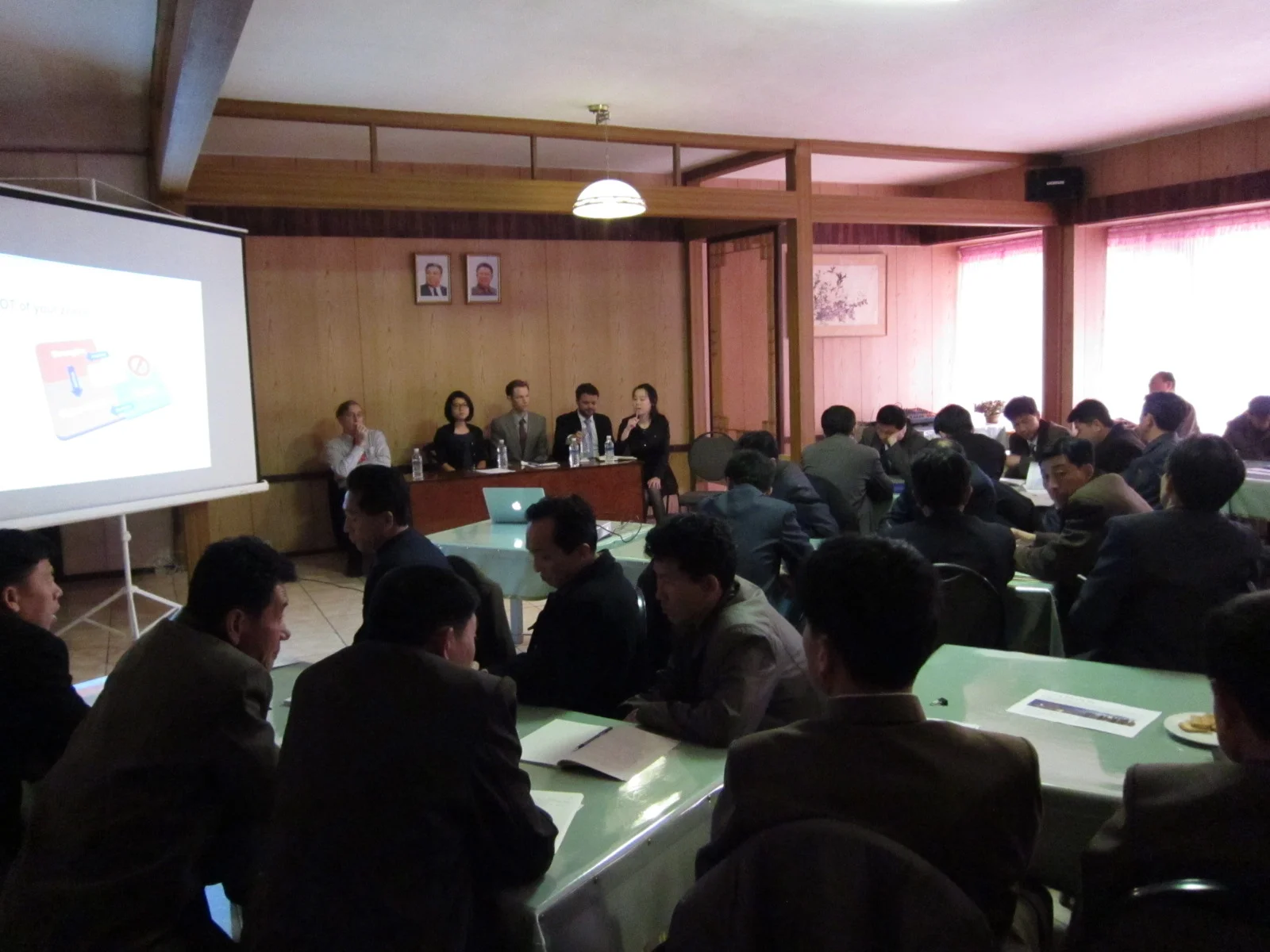
Recent workshop on SEZ development in Wonsan with participants from many of the East Coast provinces

Recent workshop on SEZ development in Wonsan with participants from many of the East Coast provinces


When the Special Economic Zone policy (SEZ) rolled out throughout 2013, I admit to being initially skeptical of its odds for success. We first heard about the policy in March 2013, when it was on the verge of being passed. In May, Choson Sinbo leaked details of the policy, which was followed by an international conference on SEZs in October unveiling the policy to the Western press. Since 2013, we have conducted 4 workshops related to SEZ setup and development and interviewed over 30 persons from multiple provinces involved in the SEZ effort. Chatting with them has given me some cause for cautious optimism.


My initial skepticism kicked in because the investment amounts North Korea suggested they were going to attract for these zones looked unrealistic, making me wonder how much of the lessons of the past 20 years have sunk in. Finding enough investments for Rason and Hwanggumppyong has been a challenge, much less for the proposed 14 zones. Furthermore, it seemed unlikely that the North Korean government could provide the infrastructure for so many zones - infrastructure needed to make these zones attractive to foreign investors. Rason had to depend on Chinese support to pave its road to the border.


North Korea’s prior approach to SEZs also leaves much to be desired. In particular, SEZs' value in driving economic growth comes in part from their integration with the rest of the economy (e.g. through domestic companies supplying to the zones). In Rason, North Korea fenced off the zone, figuratively and literally. The SEZ was meant to be a self-sustaining bubble. Additionally, the creation of a new organization to manage SEZ investment reminded me of the proliferation of investment attraction bodies in North Korea, many of which are now defunct.


Cooped-up workshop leader practices mattress jumping in Wonsan

Cooped-up workshop leader practices mattress jumping in Wonsan

However, chatting with zone administrators and policymakers, it does seem that there is value to the SEZ policy. Experimentation is clearly on people’s minds, perhaps more so than investments. In one example, a 'spot' SEZ  allows deviation from prescribed agricultural methods, allowing adaptation of agricultural production to local conditions. This is important in North Korea's context as tinkering with highly politicized and nationally-set agricultural methods has gotten people into trouble in the past.


I also speculate that the new zones will be much more connected to the domestic economy through various mechanisms. Fencing off zones at the corners of North Korea is possible, but doing so for “spot zones” of 2-3 square kilometers, all around North Korea, seems a lot harder. The spatial characteristics of these zones favor linkages with their hinterland, whether by design or accident.


Thought appears to have been given to attracting not just foreign investments, but also domestic investments. This is another linkage between the zones and the broader Korean economy. I hope that the SEZs will provide a more favorable environment to domestic entrepreneurs, by providing them with flexibility and security in building new businesses (which is already happening), and eventually giving official and legal sanction to do so.   

More Border Tensions (not that one)

Choson Exchange has heard that Chinese customs officials inspecting trains crossing from Dandong to Sinuiju have recently begun imposing a weight-based tariff on goods going into North Korea from China.

Most of those goods will end up going through here...

Most of those goods will end up going through here...

It was described to Choson Exchange as a "flat fee for anything over 30 kilograms at 18 RMB per kilo". Bags were weighed at the platform, but not inspected with any detail. Thus, in one's bag, a kilo of gold, apples, printer toner or chocolate would all appear the same on the scale and be charged accordingly. 

Crucially, this fee does not apparently apply to Chinese or other foreign passengers, just DPRK citizens. Nor is it applied to freight or commercially shipped goods that cross the border. It isn't a huge amount of money either, even if it can add up quickly: Koreans tend to bring back a lot of consumer goods after excursions or sojourns in China. This merely appears to be a small squeeze on the classes of people that can take such trips, probably designed to annoy and frustrate, but not cause any real harm to trade. It is the latest manifestation of China's displeasure, after tightening up residence visas and delaying goods that are shipped to Nampo through Dalian

Masikryong Speedos and Other Clothes - Too Expensive.

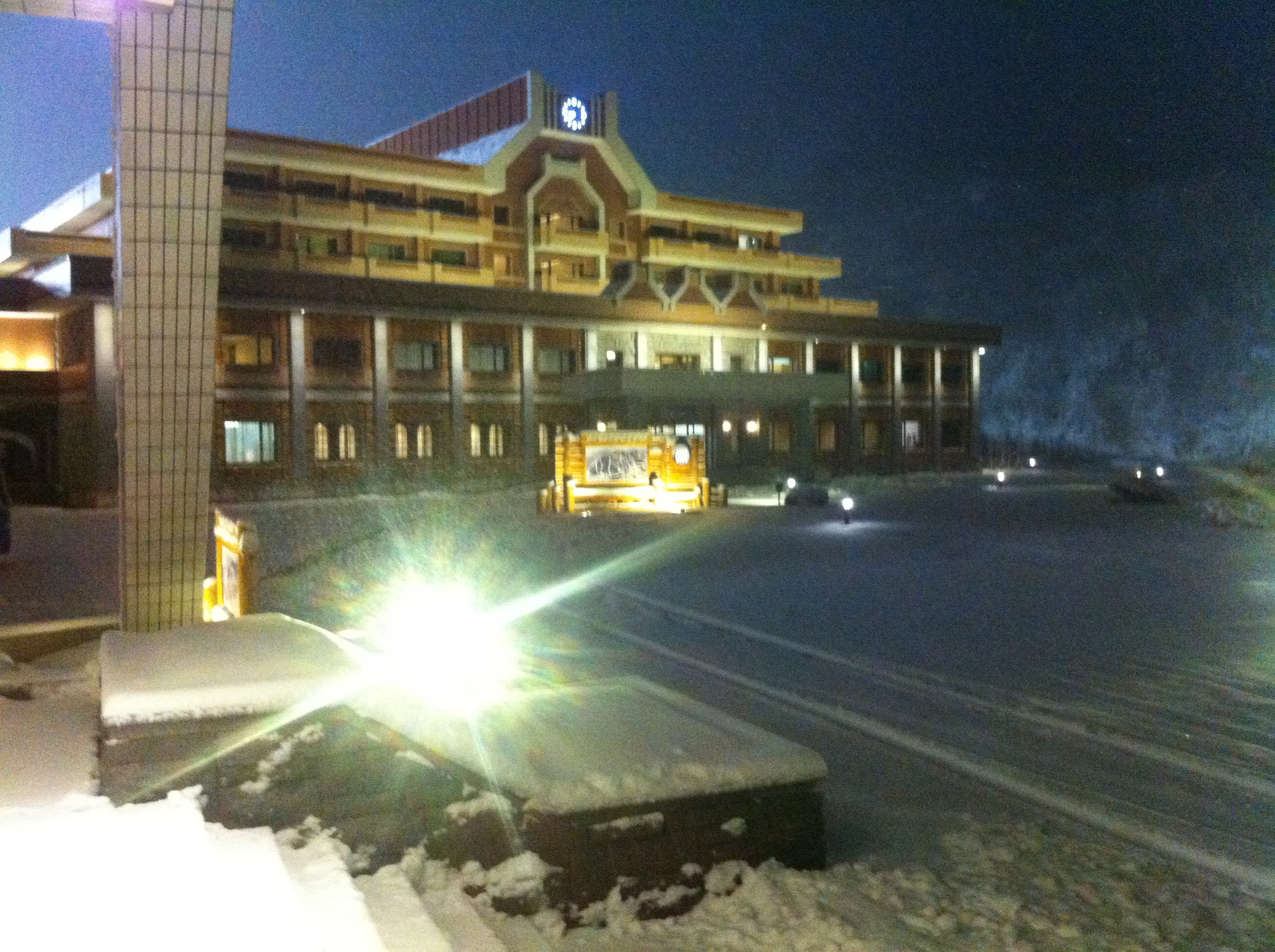
Two weeks ago we had the chance to stop by Masikryong on the way back from our workshop in Wonsan. The DPRK has grandiose plans for Wonsan as a tourist destination, a big part of which will be the ski resort we've all heard so much about.

We arrived just after the season had ended, so the hills were bare and there were no other guests, creating a very The Shining vibe. But just as we arrived, the the skies opened and 5 inches of snow descended within a few hours, turning the pass into a really enchanting landscape.

Sunrise

Sunrise

Overall, the place seems fairly well built, though one can see that it was done fast and some of the trimmings are less than perfect. The design is quite modern and seems very much like a Chinese/European ski chalet. There are two main buildings, one with quite fancy, quality hotel rooms, a very nice pool and sauna, a communication room with internet for $6 per hour and a 9th floor bar with a lovely view. The other building hosts the ski equipment rental area and dorm-style rooms, presumably for the work-teams and youth groups they'll be bringing up for vacations.

One weird thing we noticed was the prices seemed to be all over the place. In the snack shop you could find cartons of 100% juice imported from Thailand for $2. In the restaurant, Tempura was 70 cents and a serving of pork ribs was $1.50.

Yet in the clothing shop, this was going on:

That's over $150 for googles

That's over $150 for googles

Jackets on sale for well over $1000

Jackets on sale for well over $1000

A ski helmet for nearly $600

A ski helmet for nearly $600

I'm no expert, but a quick good search reveals that Carrera helmets go for about $40. We suspect that whoever is running it hasn't yet had time to sit down and think about a pricing strategy that will actually move these things - even privileged locals can't afford this and foreigners aren't going to buy it. Especially when you can rent all ski equipment, including clothes, quite inexpensively.

They didn't really run it a full season, it was only ready to go in mid-January and I'm sure the management had a lot of other things to worry about. It will be interesting to see if these prices are all different when winter rolls around and they decide they actually want to try to get some of them off the shelves.


Record 180 participants in Q1 2014

Choson Exchange teammate Nils and a workshop leader in front of a funky restaurant decoration

Choson Exchange teammate Nils and a workshop leader in front of a funky restaurant decoration

Provincial Development

Two weeks back, our team endured a bumpy 4-hour ride to Wonsan from Pyongyang. We were heading there to conclude our fourth and final workshop in the country for March. Key topics focused on economic zone development, improving the environment for businesses, and on provincial development. Workshop leaders cautioned that initial investment amounts from outside might be small, but emphasized the importance of starting with small investments and recognizing it as a learning journey for local officials and for investors.

We started 2014 strong, completing 4 workshops in North Korea in the first four months and 1 workshop overseas. Workshops were split between the provinces, attracting participants from the provinces, and Pyongyang. Over the 5 workshops, we covered provincial development, improving the business and investment environment, entrepreneurship, and fiscal and monetary policies. In total, 180+ participants took part in programs in the first quarter of 2014.

Workshop leaders take a break in the provinces in what we think is the funkiest hotel - the Dongmyol Hotel in Wonsan has an atrium above the atrium on the fourth floor.

Workshop leaders take a break in the provinces in what we think is the funkiest hotel - the Dongmyol Hotel in Wonsan has an atrium above the atrium on the fourth floor.

During the workshops, I was also heartened to meet researchers who were interested in learning how to build an ecosystem to commercialize IT research. In North Korea, there is a tendency to focus on technical skillsets at the expense of figuring out a market and a business model for IT products. I am glad to see that there is recognition at least among some people that they need to balance technical skills with commercial savvy.


Women in Business

In particular, we would like to highlight a workshop we did for our Women in Business program. As we mentioned, we are in the last phase of this program. This program was set up to target female managers in the growing small and medium enterprise segment with training in business management skills and entrepreneurship. In March, we had 45 participants in the program, with 84% being females. This is the highest ever percentage of females we had for an in-country workshop, reflecting continued interest in this unique program. The female participants were incredibly bright, curious and full of questions. Our main regret was that we were unable to extend the length of the workshop to answer all those questions, despite requests from North Korean partners to do so.

Snowflake selling exercise had our Women in Business actively running up and down the workshop space

Snowflake selling exercise had our Women in Business actively running up and down the workshop space

Going forward, given limited funding support for this program, we are likely to start reducing the frequency of workshops for the Women in Business initiative. We expect to continue maintaining a low level of activity for the program. We will continue with other programs focused on policy and entrepreneurship, but look forward to having an active program dedicated to women in business again at some point. We would like to thank our workshop leaders, sponsors, volunteers and partners for the work we have been able to do this quarter.

Customer Loyalty Cards and Bottled Makkoli - More Marketing Tools Appearing

Pyongyang's Haemachi (Sunrise) restaurant and retail complex now has a new beer bar, serving Paulaner beers, almost certainly brewed at one of China's many Paulaner brewpubs. (Though it was claimed by staff that this was not a joint venture - "ha ha, everybody asks that!")

Beer. Paulaner Beer.

Beer. Paulaner Beer.

Not packed on a Saturday night.

Not packed on a Saturday night.

Despite being really chilly (in March) and serving beer that is basically inferior to many of the locally brewed options available, one thing did catch our eye:

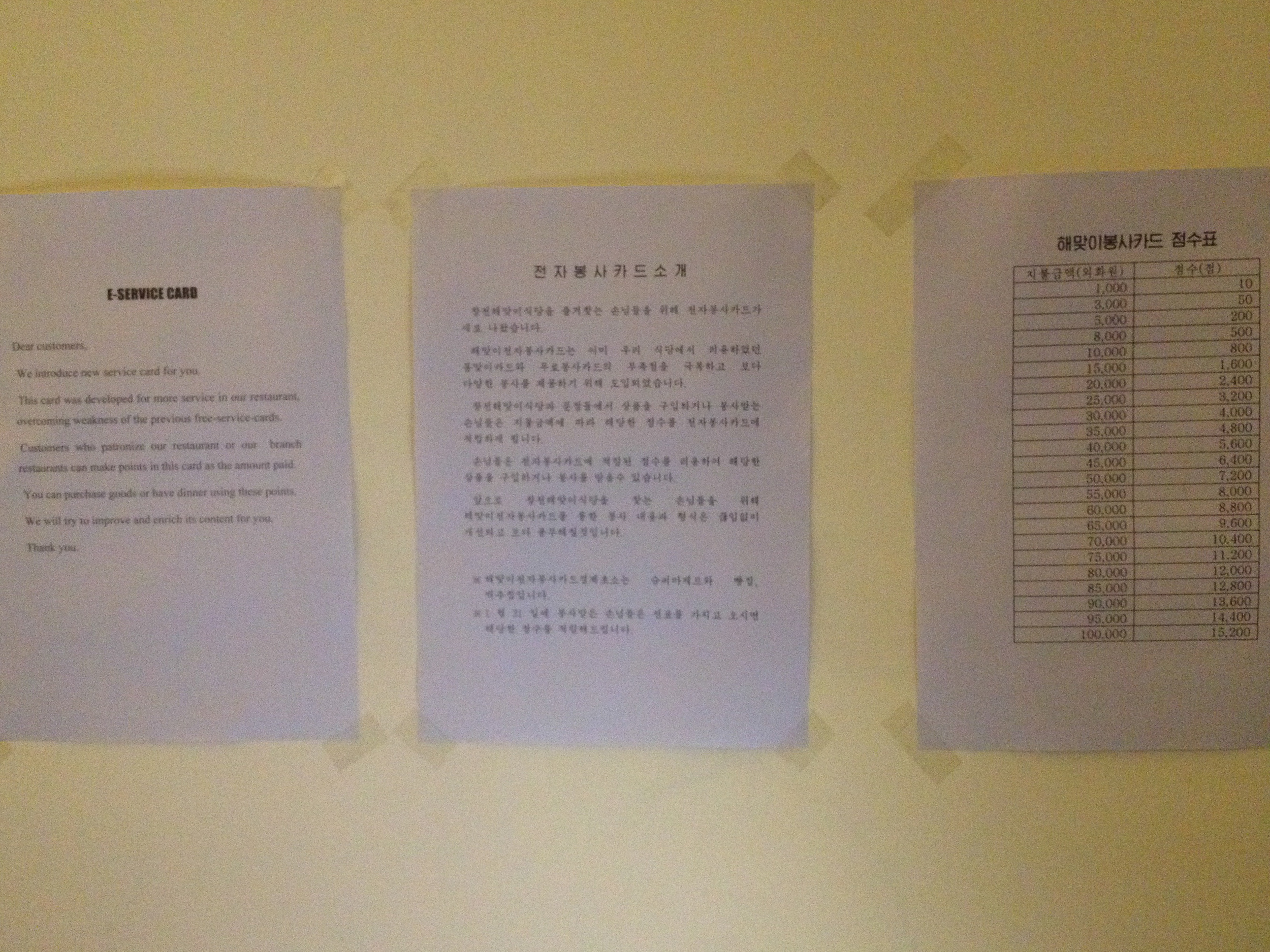
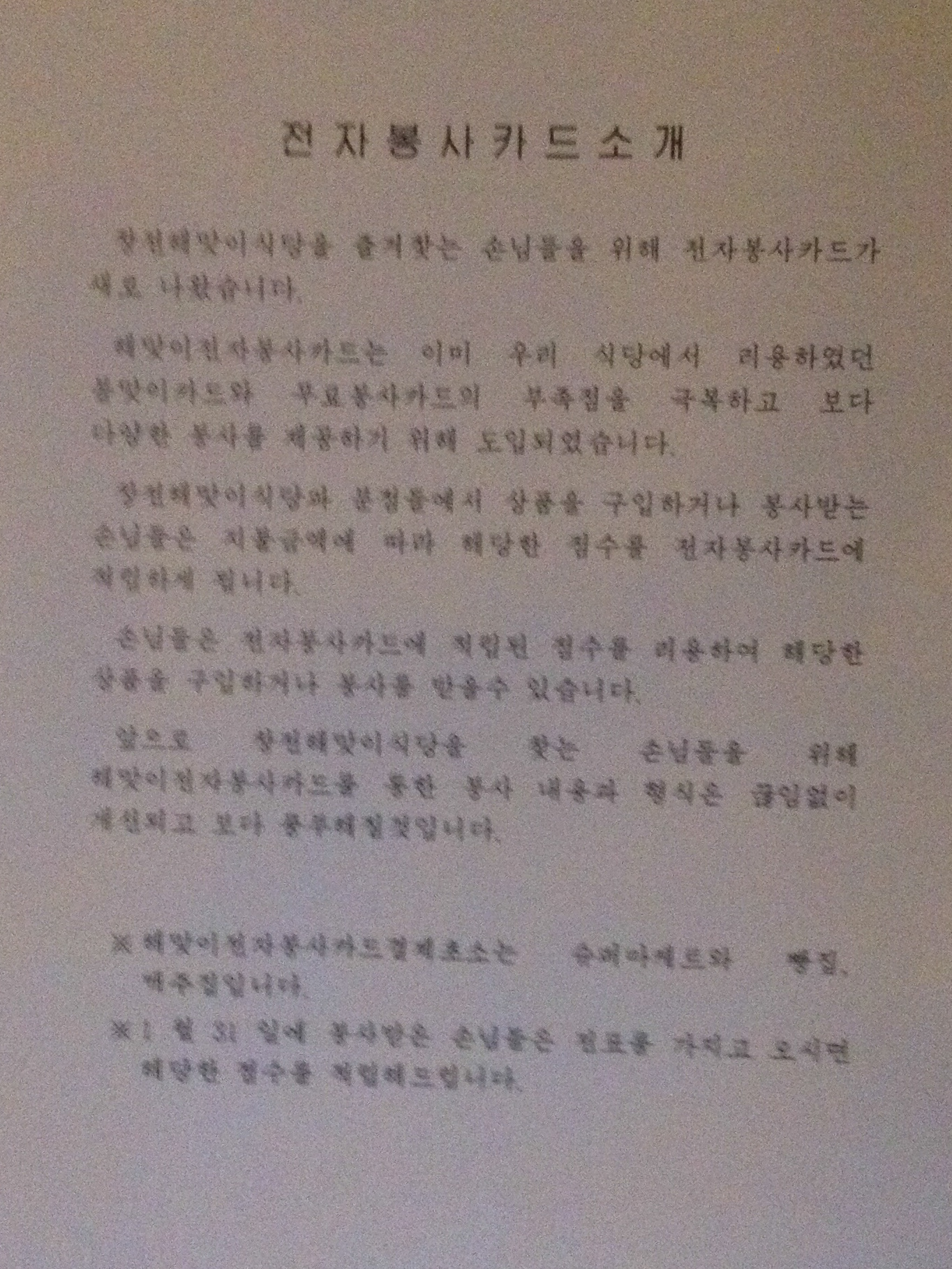
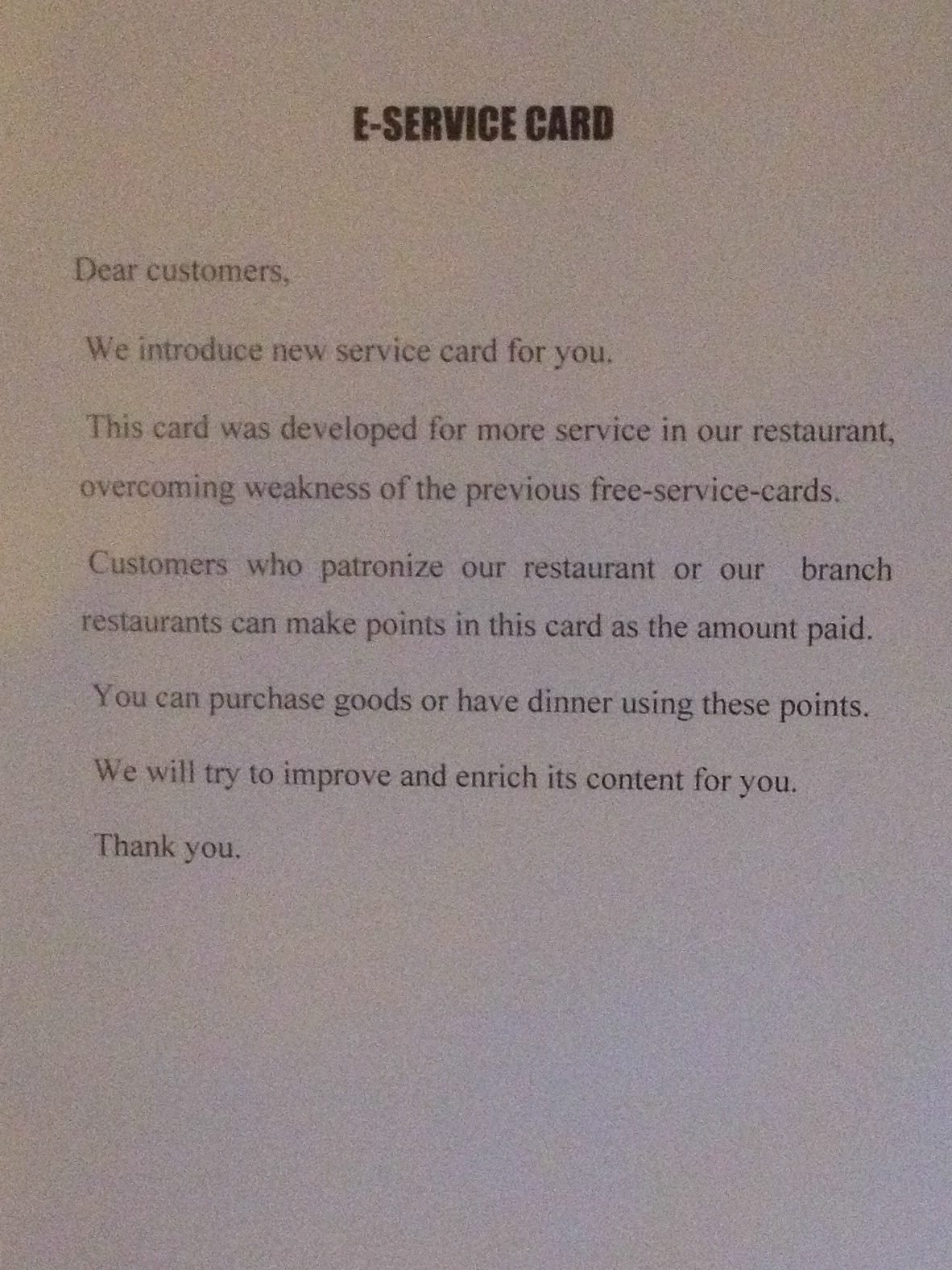
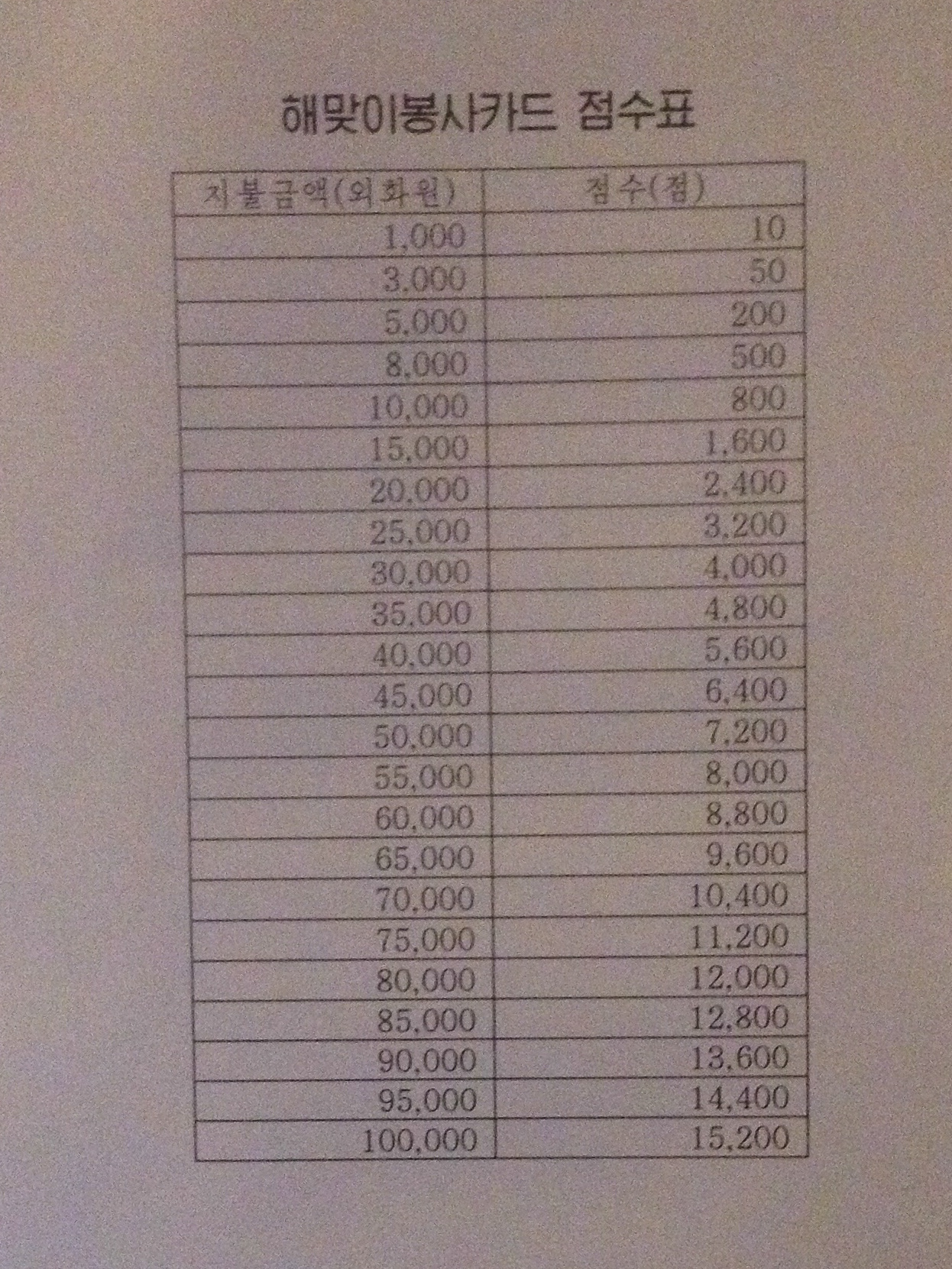
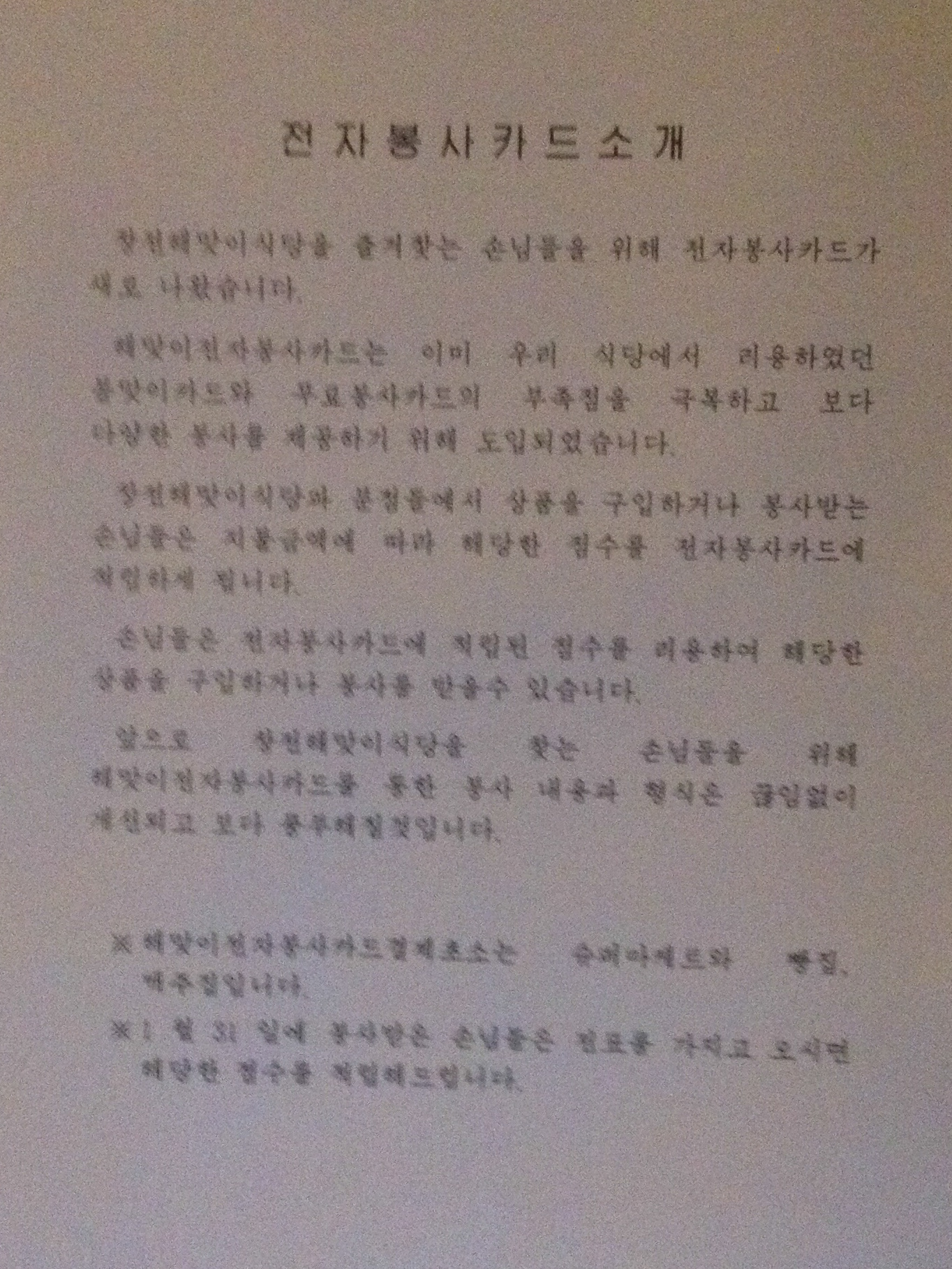
There is now a haemachi-wide loyalty card, which operates as you'd expect: keep spending, earn points, use the points for things later.

They have thoughtfully included foreign guests in this scheme, as well.

Apparently, Rakwon (Paradise) Department Store was the first shop in town to have a customer loyalty program some years ago. They increasingly appear to be on the losing end of the retail boom in Pyongyang, however, as newer, glitzier places pop up. Rakwon appears more and more a vestige of the 1980s.

It has been moving into processed foods - another boom industry - and has begun bottling its beer and makkolli. Actually, this author would go so far as to say it might be the best makkolli in the world. So loyalty cards aren't everything. You still need a good product.

Simply the best:

No additives or preservatives here, friends.

No additives or preservatives here, friends.

More Taxis

A new fleet of taxis can be seen around town. We're told that the ranks of taxis in Pyongyang have now swelled to over 1000 cars, a dramatic increase in less than a year. The newest company in the game sports handsome maroon and green BYDs and like all the others, competes for customers outside hotels, universities, train stations and other popular shopping and leisure destinations. 

Easier to catch a cab than in Beijing, one suspects.

Easier to catch a cab than in Beijing, one suspects.

We couldn't find out to whom the new maroon cabs belong, but it is a different company to the one that runs the "Beijing Taxis" that popped up last year modestly in the spring, but then grew to a fleet of 800 by the end of the year.

You'll never be "marooned" in Pyongyang again! "Marooned"! Ha!

You'll never be "marooned" in Pyongyang again! "Marooned"! Ha!

There are also new red taxis dotted around town, in smaller numbers, but we're told those are not a new company, just upgrades for older fleets. Competition appears to be dragged the older, established players to improve their service, it seems.

Shiny.

Shiny.

Will North Korea's latest investment agency last to 2015?

(August 2014) Construction continues in Rason, at the oldest North Korean Special Economic Zone, with the help of the Chinese

(August 2014) Construction continues in Rason, at the oldest North Korean Special Economic Zone, with the help of the Chinese

In March last year, DPRK approved a new Special Economic Zone (SEZ) policy that saw the designation of multiple SEZs across the country. This was unveiled to Western press with relative fanfare through a conference organized in Pyongyang in October that year. Supposedly spearheading this initiative was the new State Economic Development Commission (SEDC). As of early this year, it still remains uncertain how exactly the institutional setup for SEZ management will look like, with multiple layers of institutions and authorities claiming some affiliation with zone management and investment attraction for the zones. For an excellent summary of SEZ initiatives in DPRK, check out Brad Babson’s piece in 38North.

The SEDC appears to be a mishmash of several departments that were moved over from the Joint Venture & Investment Commission (JVIC), alongside the repurposing of a body under the Cabinet known as the State Economic Development Bureau. The SEDC Chairman is reportedly Kim Ki Sok, who previously was a vice-Chairman at JVIC.

Given the fluid institutional basis for many of the new economic institutions in North Korea, it is even possible that the SEDC and JVIC could be merged again at some point in the future.

From a policy standpoint, it is not immediately obvious that a separate and new organization should manage SEZs. After all, if JVIC is pitching itself as a one-stop shop for investors, investors should have access to information on all the potential investment avenues. Was the SEDC carved out of JVIC because investment amounts attracted by JVIC did not match up to expectations? Did ambitious individuals, who decided they could carve out their own economic fiefdom, set up the SEDC, or was it founded based on a conscious policy of strengthening development initiatives and empowering investment attraction efforts? Should efforts focus on strengthening existing investment attraction bodies, rather than the constant reshuffle and establishment of new entities? These are key questions that we need to study to understand the trajectory of North Korea’s economic initiatives. Both JVIC and SEDC, alongside many other entities, claim overlapping jurisdictions over investments into these new zones.

Supposedly, the SEDC has undergone significant management changes since Jang’s purge. Jang Sung Taek was rumored to be closely affiliated with the SEDC’s formation. Was this true? And if so, did his execution permanently impair this new entity? What does this mean for the future of SEDC? Will a new team take over its management and be given significant powers, or will SEDC be winded down or reabsorbed back into JVIC?

Let’s see what 2014 brings for this latest contender in the investment game. The field is often filled with high-profile contenders who have often faded into obscurity. Remember the Taepung group?

Star Cluster - the Cheese Place

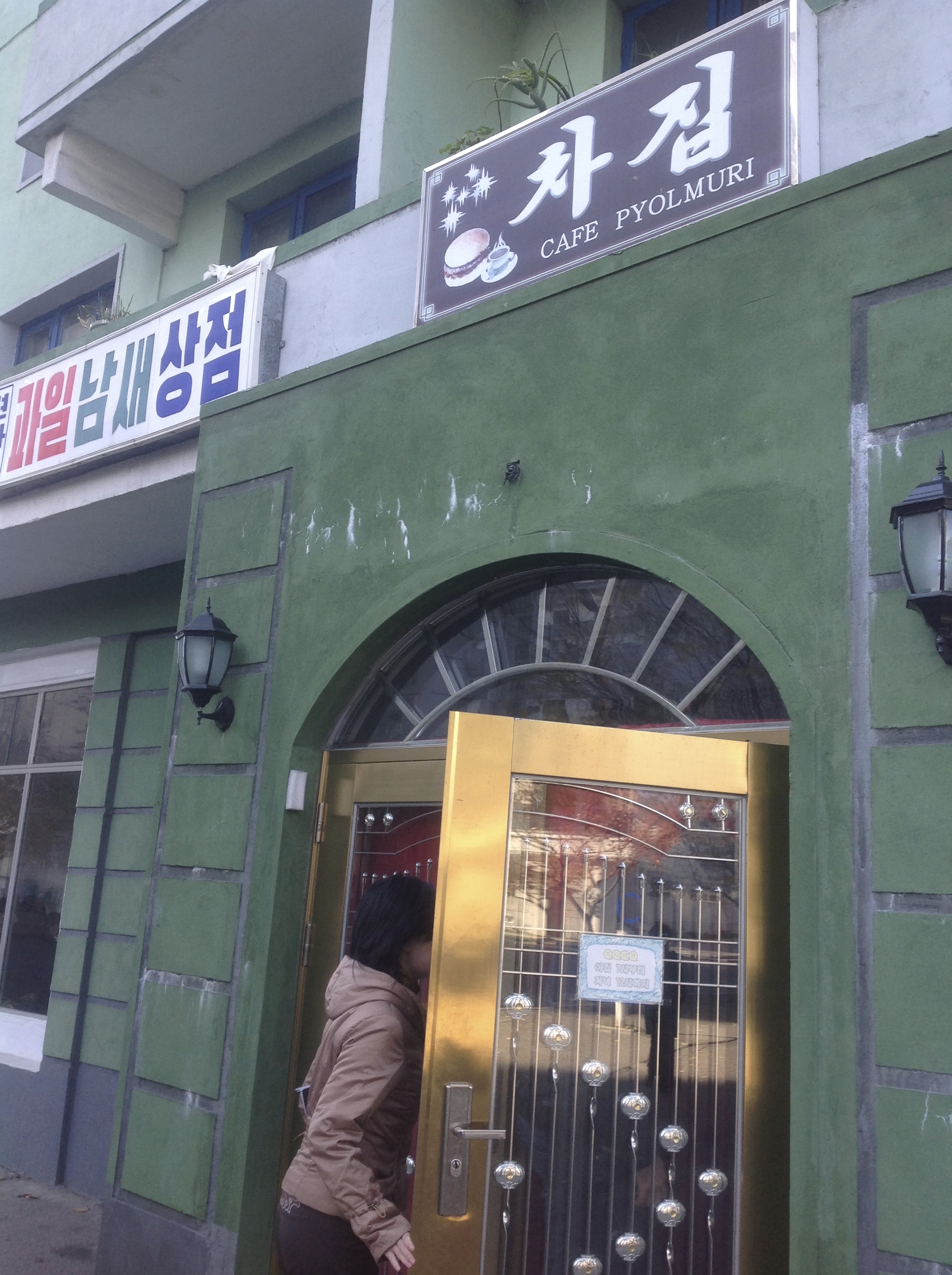
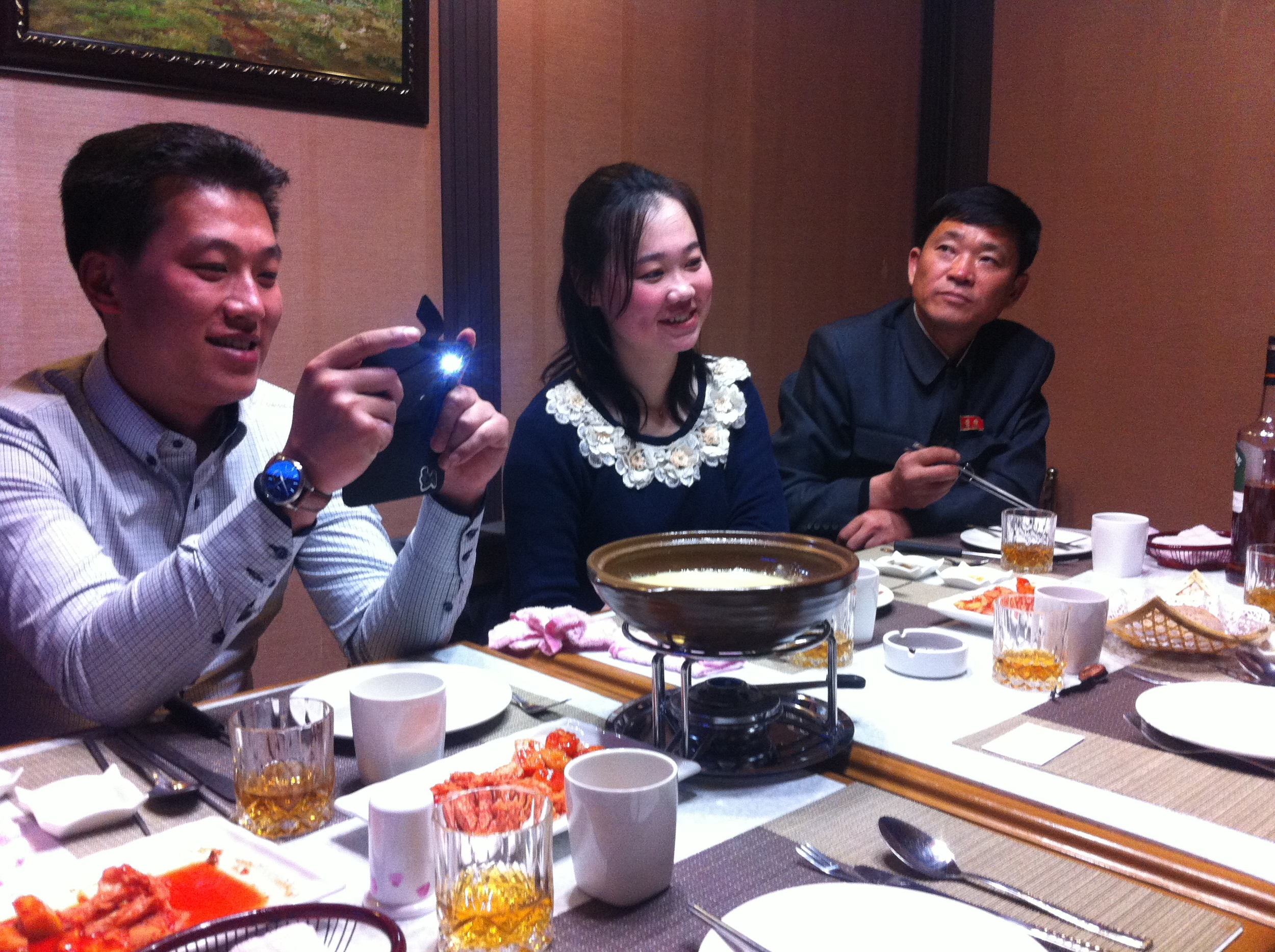
There is a pretty darn good fondue place in Pyongyang - Cafe Pyolmuri (Star Cluster, in English). OK, so this isn't exactly news, in the sense that it isn't new or important in any grand sense, but it is both of those things to us, because sometimes when you're in-country for awhile, all the restaurants start to look the same. 

"A Group of Stars", not red, not five-pointed.

"A Group of Stars", not red, not five-pointed.

Pyolmuri has been around for awhile, we'd just not heard of it. Indeed, TASS reported on fondue back in 2011

And apparently, Adra, an aid organization run by Swiss Adventists, opened a Swiss café a few years ago, serving cheese fondue. We're not sure if this is the same place, but since this restaurant has plenty of booze, we'd have to guess that maybe it isn't an Adventist joint.

The genial owner, who has business cards in English claiming an Italian restaurant specializing in dairy foods, told us that Italian chefs had trained the local staff. Indeed, their pizza was pretty tasty, though not as good as the fondue. (Still, pine nut, mushroom and spinach is a pretty cosmopolitan option.) One of our Swiss trainers on our last trip to Pyongyang was even allowed to poke around in the back to see how they do it. He was particular about fondue, but gave his official stamp of approval - "It's not home, but pretty good for what they have to work with."

Something in common with regional friends - see the Pictures of Asians Taking Pictures of Food Tumblr

Something in common with regional friends - see the Pictures of Asians Taking Pictures of Food Tumblr

They use a white wine base (no Kirsch around these parts) and a blend of imported and local goat's cheese, which had that pleasant 'goaty' tang to it. We're not sure where the goat's cheese comes from as there are several goat farms in the country. The DPRK began focusing on goat husbandry in the early 2000's to provide dairy, inspiring the "All Families Should Extensively Raise Goats" campaign. A decade ago, GRS started work on a goat farm, too. 

As part of the campaign, Kim Jong Il made numerous visits to goat farms in the 2000s. Here's a video about about a 2008 visit, in case you are not very busy for the next 11 minutes:

Pyongyang, August 7 (KCNA) -- General Secretary Kim Jong Il gave field guidance to the Hamju Pig Farm and the Hamju Phyongphungdok Goat Farm. The first leg of his guidance was the newly built Hamju Pig Farm.

Whatever one thinks of the 'extensively raise goats campaign', the cheese sold at Star Cluster to take home is quite good, if not cheap: 17 USD per kilo.