Helping Build a New Finance College

Kim Il Sung University, Pyongyang

Kim Il Sung University, Pyongyang

North Korea established a new finance department at Kim Il Sung University last year. We worked with professors from this department during our workshop in September, and our workshop leader mentioned that there were very promising people among the group.

In line with our aims of promoting knowledge exchange in economics and business (especially in finance), we are exploring ways to work with Kim Il Sung University Finance College to develop intellectual capital. Aside from short-term guest lectures at the college, we are looking to set up a faculty development fund to bring professors out to overseas universities.

Pyongyang University of Foreign Studies was also looking into expanding their business classes and at setting up a management department. However, the professor in charge of the initiative has been replaced so we don't know what is the current status of this initiative.

Helping North Korean Students Share Learning with Technology

Some random brainstorming

Some random brainstorming

We recently received emails from North Koreans asking for help in developing overseas study opportunities by setting up regular university exchanges. While the opportunity to go overseas is itself a valuable experience that can aid the professional development of young North Koreans, we believe the use of technology can help increase the learning value of these programs.

North Koreans have been very adept at using Gchat, Skype, Facebook, Gmail and other technology tools to communicate when abroad. North Koreans abroad need a support network able to empathize with their difficulties in adapting to foreign cultures. They also can benefit from tools that will allow them to share their learning and experiences with counterparts in other country. One way to do this is to use such communication technologies to allow North Korean students abroad to keep in touch with one another. This can be held in conjunction with in-Pyongyang pre-programs to help participants get to know each other before they depart for their separate destinations.

Jean-Jacques Grauhaur, Sec-Gen of the European Chamber of Commerce in Korea Joins CE as an Advisor

At the Grand People's Study Hall in Pyongyang

At the Grand People's Study Hall in Pyongyang

Jean-Jacques Grauhar, Secretary General of the European Union Chamber of Commerce in Korea, has been very helpful in advising Choson Exchange in an informal capacity and has agreed to come on board as an advisor to our organization.

Jean-Jacques brings with him extensive experience from his work supporting European companies in South Korea and previously in North Korea. He has spent 7 years working and living in Pyongyang, which allows him to share with CE his insights and understanding of North Korea's business and economics environment.

Jean-Jacques is especially interested in ways to promote and support business and economics understanding in North Korea in a non-political manner.

Jean-Jacques Grahaur's Bio

Jean-Jacques is the Secretary General of the European Union Chamber of Commerce in Korea (EUCCK) and co-President of the Europe-Korea Foundation(EKF). He has been living in Seoul for the last 15 years and was previously working in Pyongyang for 7 years as a business consultant. He is especially interested in supporting North Korea’s economic integration into the global economy.

For more on CE's advisors and lecturers.

6-Party Talks to Re-start - considering possible long-term impact on CE

The possibility of the six-party talks moving ahead looks more evident by the day, and the Yeonpyeongdo incident appear to have been at most a minor delay on this schedule. This is something the Obama and South Korean administration (for all the rhetoric) have been planning for for awhile, and informal discussions would have taken place, and will continue to take place as both sides feel each other out ahead of the talks. While agreements have fallen apart in the past and one has reason to be somewhat skeptical, I think some factors worth considering this round include (in no particular order of merit): Succession - With the likelihood of a full succession happening in North Korea in the near future, concerns about legacy brings opportunities and threats to any planned deal.

China's Influence - With the recent spate of economic "agreements" between China and North Korea (driven at the governmental-level), China is more influential in North Korea than ever.

Comprehensive Deal - While nuclear issues will dominate the talks, this round will likely feature greater discussion on issues such as economic development and human security (rights). If a significant aid for nukes agreement materialize, the US administration will want to encourage North Korea to adopt new economic policies to ensure its reintegration into the global economy.

US and South Korea - The US administration this round appears (on paper) to be more amenable to an agreement while the South Korean government, for all its reported hawkishness, seems somewhat pragmatic.

If an agreement is made and successfully executed by all parties, the economic environment in North Korea could change rapidly, which will enable and require us to think of new and innovative ways to tap our network to add value to the economic development process in North Korea.

2010: Reflecting on Progress for the Year

Australian Department of Foreign Affairs and Trade Secretary, Mr Dennis Richardson, present a plaque to the author of the winning Emerging Scholars article Geoffrey See (Photo: Darren Boyd, ANU College of Asia and the Pacific)

Australian Department of Foreign Affairs and Trade Secretary, Mr Dennis Richardson, present a plaque to the author of the winning Emerging Scholars article Geoffrey See (Photo: Darren Boyd, ANU College of Asia and the Pacific)

As the year comes to a close and we conduct our annual review, I would like to take some time to thank all supporters of our work. Projects in North Korea are never easy to support, execute or sustain but I feel that we have made some progress in this area. It is thankless work that is still much needed. And it is work made possible by the many supporters we have.

As 2011 approaches, we are planning exciting new programs building on our previous work and findings from on-the-ground interviews. We plan to build more linkages between streams of programs to increase our effectiveness, develop our overseas program component, and focus on targeting programs at specific institutions to raise the impact of our programs. We also have a strong pool of partner institutions and lecturers who can lead high-quality workshops in our target fields of business, economics and law.

For 2010, we are proud of our achievements both in North Korea and outside. We introduced OpenCourseWare into the higher education system, and held finance and economic strategy workshops for participants from Kim Il Sung University, the State Development Bank, Koryo Bank and Daesong Bank. We also disseminated materials on State-Owned Enterprises restructuring to interested partners. Externally, we began exploring a pilot internship program for young North Koreans which we want to use to gain feedback for a more structured program that is in the works.

We also presented non-proprietary information on our work to a selective audience in government, international organizations, academia and business in Australia, Singapore, the US, China, Sweden, Switzerland and South Korea (see picture above). Through these discussions, we have strengthened the network that underlays our model.

However, there is more that can be done and things that can be done better. We did not receive visas for some lecturers and we raised this issue with our North Korean partner. After reviewing the situation, we decided that we need work with various partners in order to choose those who can deliver. We have developed an operating model to do so, and will continue to test and refine this model. Technical barriers to staying in touch with those we met in Pyongyang is also an issue that we have started to address.

For 2011, we are now putting together our projected plans and materials for sponsorship. Funding is the most crucial missing link and we hope to focus more on this in the coming year.

Lessons from Introducing OpenCourseWare in North Korea

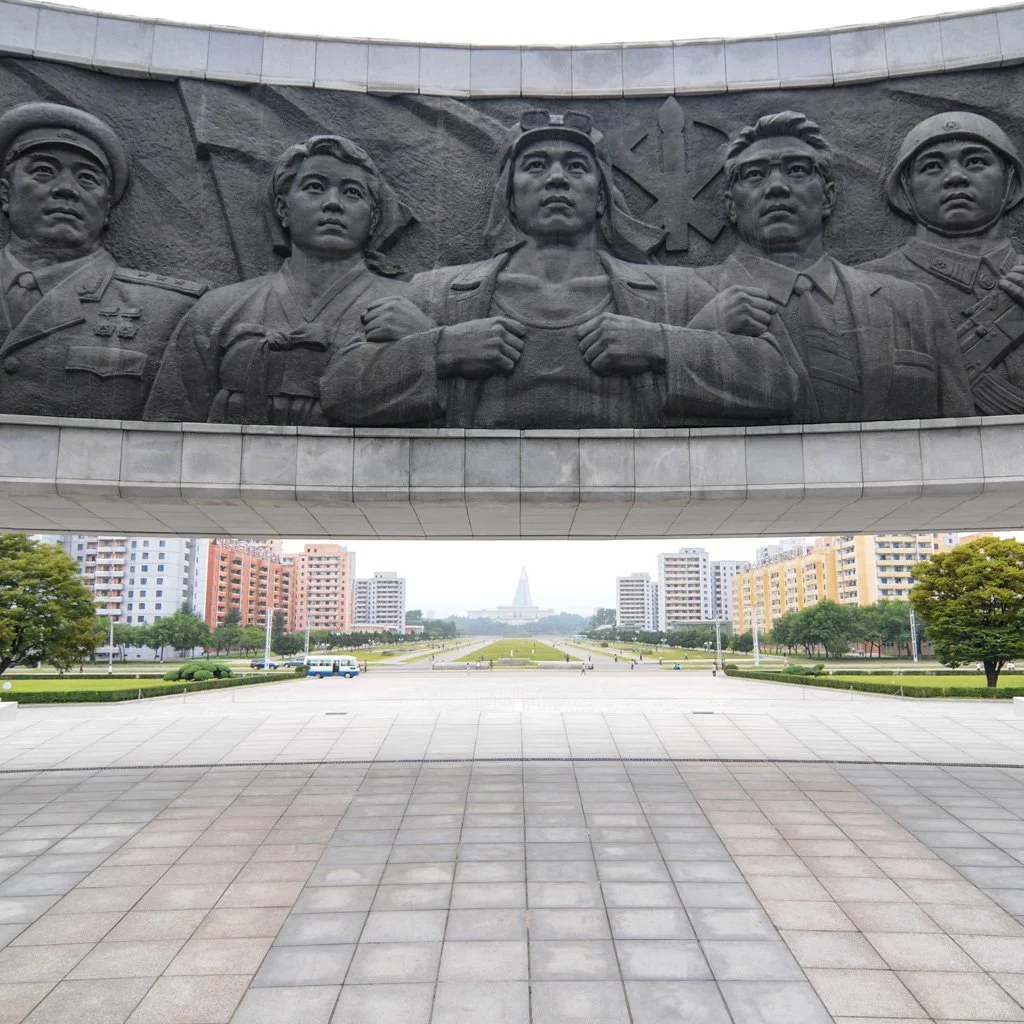
One of our aims is to introduce OpenCourseWare in North Korea. We presented the concept behind OpenCourseWare and demonstrated some course materials in Economics, Physics and Mathematics during a trip to Pyongyang this year. It was very warmly received with a senior Party member arranging for us to meet the dean of a university to explain the materials in greater details. What I found interesting about the process was:

1. The North Koreans we met were very interested when we mentioned the big-name American universities that contributed to OpenCourseWare. The people we met were aware of famous American universities and seemed interested in what they had to offer.

2. It was only after the high level party official expressed his interest in the OpenCourseWare materials that people were willing to ask more about the materials. Hierarchy obviously matters a lot and having a top-level person give his approval made others willing to act on introducing these materials into the system.

Photos from September 2010 Projects in Pyongyang

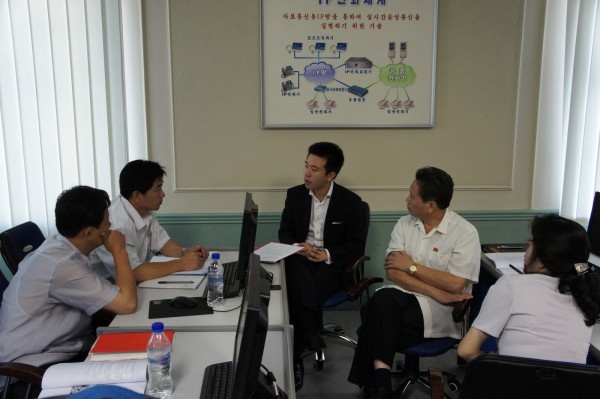
(Pyongyang, North Korea) Small group workshop on finance and economic strategy

(Pyongyang, North Korea) Small group workshop on finance and economic strategy

We have put a limited set of photos from our workshops and OpenCourseWare display in Pyongyang in September this year on our Facebook album page. Do take a look - you will have to register as a Facebook fan by clicking the Facebook page link on the column on the right side of this website.

Internship Program in London for Young North Koreans

We are exploring opportunities for young North Koreans fluent in English to participate in an informal internship or research assistantship in the fields of business (esp. finance), economic development, or law to gain professional understanding and exposure to these fields. The organization should be located in London. Ideally, we hope to attach them to a mentor from an established organization willing to take a strong interest in the educational and professional development of the intern. The mentor is likely to have a strong interest in North Korean issues. The period of internship can last up to a year. While compensation is not necessary (but much appreciated), the host should be able to cover transportation costs to and from work as well as lunch expenses at the minimum.

The program can be informal and non-contractual in nature. Please feel free to contact CEteam@chosonexchange.org if you have leads on possible hosts.

Met Mongolian State Secretary (of Wikileaks fame)

I recently met the Mongolian State Secretary who is mentioned in the recently leaked US cables. The Mongolians received a North Korean delegation and Mongolian diplomats passed on messages from the North Koreans to the US indicating a desire for bilateral dialogue. The Mongolians also highlighted a desire by North Koreans to shift their focus to the economy. I discussed the possibility of support for our knowledge-sharing programs in a variety of ways with the State Secretary.

Oct-November Update

Over the past two months, we have been having a series of meetings to prepare ourselves for our main project for next year. We intend to focus on one key economic institution in North Korea to help develop the institution. In preparation for this, we have - began consultation with experts in development finance, economics and law - met in Singapore with involved parties to understand whether the country would be a suitable venue for potential exchanges - began sharing our work with interested audiences through a series of conferences and at universities

We are now focusing on developing our fundraising materials to help ensure that our work becomes more sustainable.